
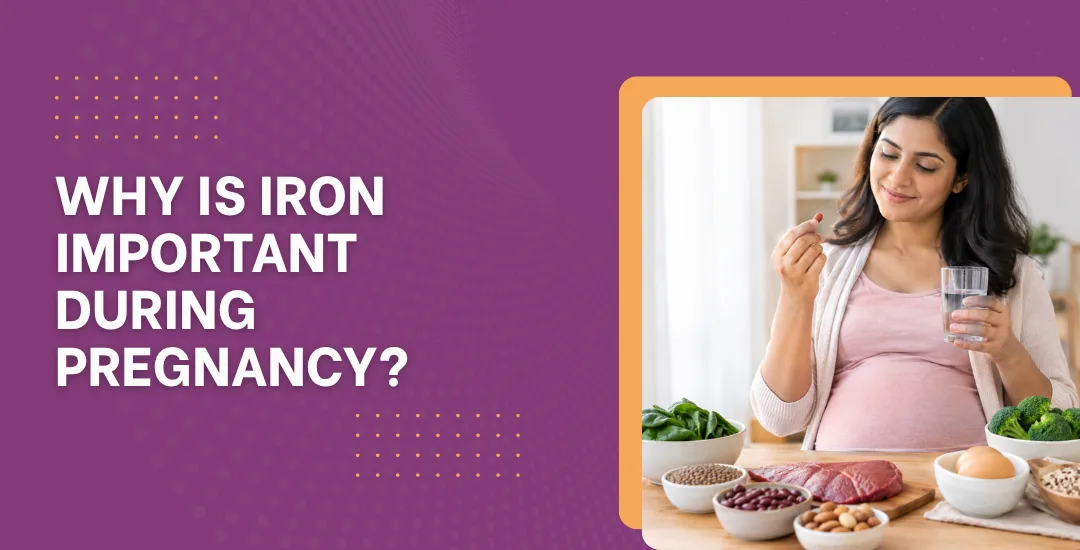
Pregnancy is demanding on your blood. Volume goes up by about half, enough to carry oxygen and nutrients to your baby, and the new red blood cells are built from iron. So iron during pregnancy isn’t a nice extra. Run short, and anemia in pregnancy can follow, which means more tiredness for you and added risks for your baby.
According to Dr. Bhoomika Jain, a gynecologist in Marine Lines, “Being tired is easy to blame on pregnancy itself. But low iron is common, quick to test for, and far easier to correct early. One blood test at the first visit tells us where you stand.”
What Does Low Iron Do to You and Your Baby?
Low iron isn’t always obvious at first. Four things are worth knowing.
- Signs of low iron: You may feel tired no matter how much you sleep. Pale skin, dizziness, breathlessness on stairs, a fast heartbeat, and headaches are other signs. Many of these also happen in normal pregnancy, so a blood test is the only way to know.
- Effects on you: Anemia in pregnancy is often caused by iron deficiency. It makes infections more likely and recovery slower. Bleeding after delivery can be heavier too, and a few women need a transfusion.
- Effects on your baby: Low iron during pregnancy is linked to low birth weight and preterm birth. Newborns can also arrive with thinner iron stores of their own.
- Which trimester matters most: None gets a pass. Iron needs rise most in the second half of pregnancy, when blood volume peaks. That’s why levels are checked again around 24 to 28 weeks.
Routine blood tests are part of pregnancy care, and they usually pick up low iron before you feel any symptoms.
When and How Should You Take Iron in Pregnancy?
The daily recommendation rises to 27 mg in pregnancy. Here is how blood results are read.
| Hemoglobin level (g/dL) | Meaning |
| 11.0 or above (10.5 in the second trimester) | Normal |
| 10.0 to 10.9 | Mild anemia |
| 7.0 to 9.9 | Moderate anemia |
| Below 7.0 | Severe anemia, needs urgent medical care |
- Morning or night: Either is fine, so choose a time you won’t forget. Iron absorbs best on an empty stomach, and a glass of orange juice helps with the vitamin C. If it upsets your stomach, take it at bedtime or with a small snack. Avoid tea, coffee, milk, and calcium tablets for two hours before and after, since they reduce absorption.
- Choosing a supplement: There isn’t one best brand. The right dose of elemental iron, in a form you tolerate, matters more. Common forms are ferrous sulfate, fumarate, and bisglycinate. Your doctor decides based on your hemoglobin and ferritin results.
- Side effects: Constipation is the most common, followed by nausea, stomach cramps, and dark stools. Dark stools are harmless. Drinking more water, eating more fibre, lowering the dose, or switching form usually helps.
- Too much, or stopping: More isn’t better. Very high levels have been linked to problems, so stay with the dose you’re given. And don’t stop on your own. Most women continue after delivery until their stores recover.
Iron isn’t the only thing tracked through pregnancy, and our piece on gestational diabetes covers another common one.
Why Choose Dr. Bhoomika Jain?
Dr. Bhoomika Jain has been in practice for more than nine years across obstetrics, gynecology, and reproductive medicine, and holds a Fellowship in Assisted Reproductive Techniques from KEM Hospital, Mumbai. A lot of women put tiredness down to pregnancy and never bring it up. She asks about it anyway, and she checks hemoglobin and ferritin early instead of waiting for symptoms. Doses follow your blood results and get reviewed as the pregnancy goes on. You’re told why a dose was chosen, and when it’s likely to change.
Wondering whether your iron levels are keeping up with the pregnancy?
FAQs
Can taking too much iron harm the baby?
Very high levels may. Stay within your doctor’s advised dose.
What trimester is iron most important?
All three, but needs peak in the second and third.
When should I take iron tablets in pregnancy, morning or night?
Either works. Pick one you’ll remember. Bedtime helps if nausea strikes.
When can I stop taking iron tablets in pregnancy?
Only when your doctor says so, often after delivery once levels recover.
References:
Disclaimer: This blog is for general educational purposes only and is not a substitute for professional medical advice; please consult your doctor for personal care.