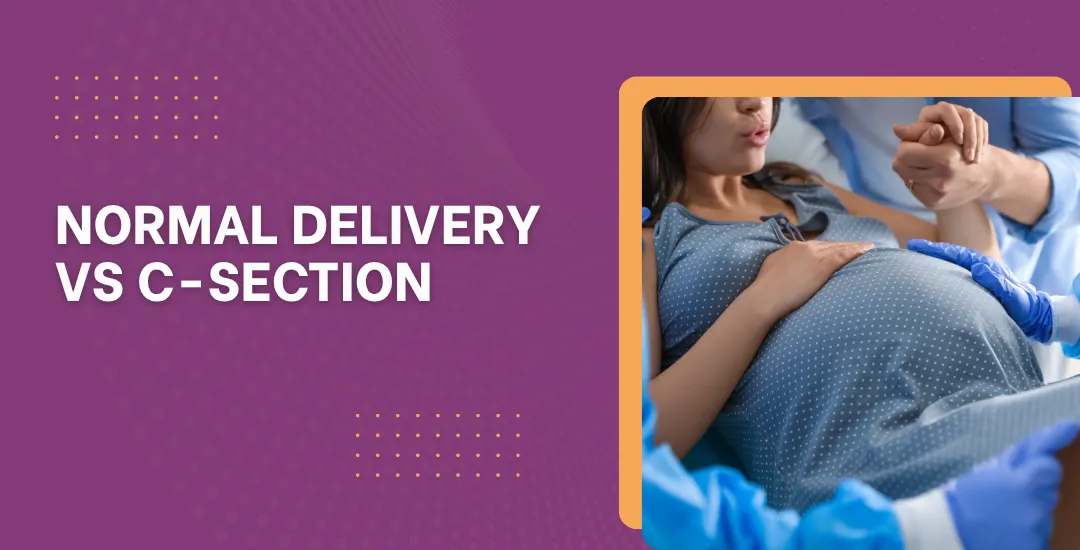
Choosing between a normal delivery and a C-section is rarely a decision made at the last minute. Over time, your gynecologist gets a clearer picture through antenatal check-ups, scans, the baby’s position, your medical history, and how labour progresses.
No single delivery method is right for every woman. Your gynecologist considers how your pregnancy is progressing to determine the safest option for both you and your baby.

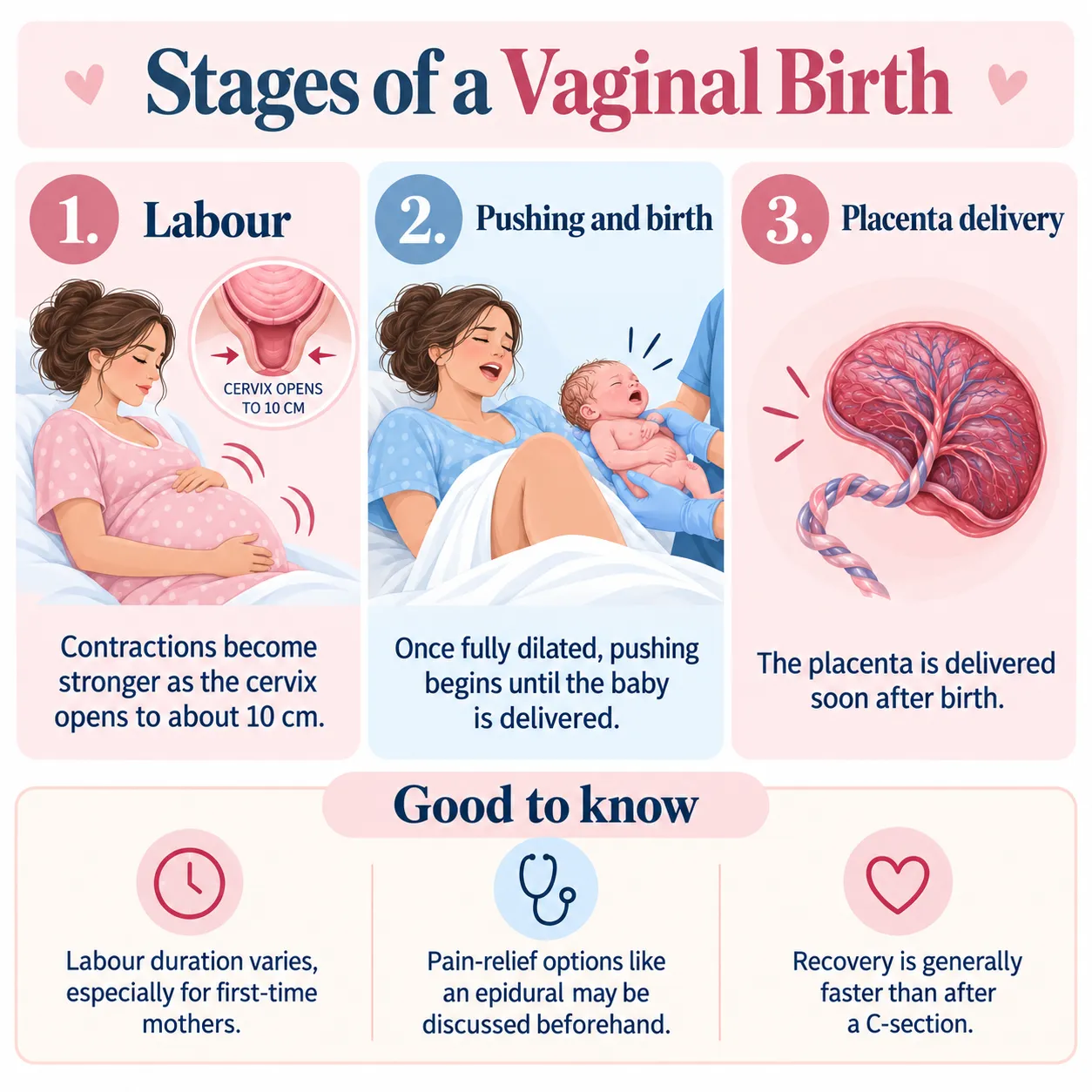
What Happens During a Normal Delivery?
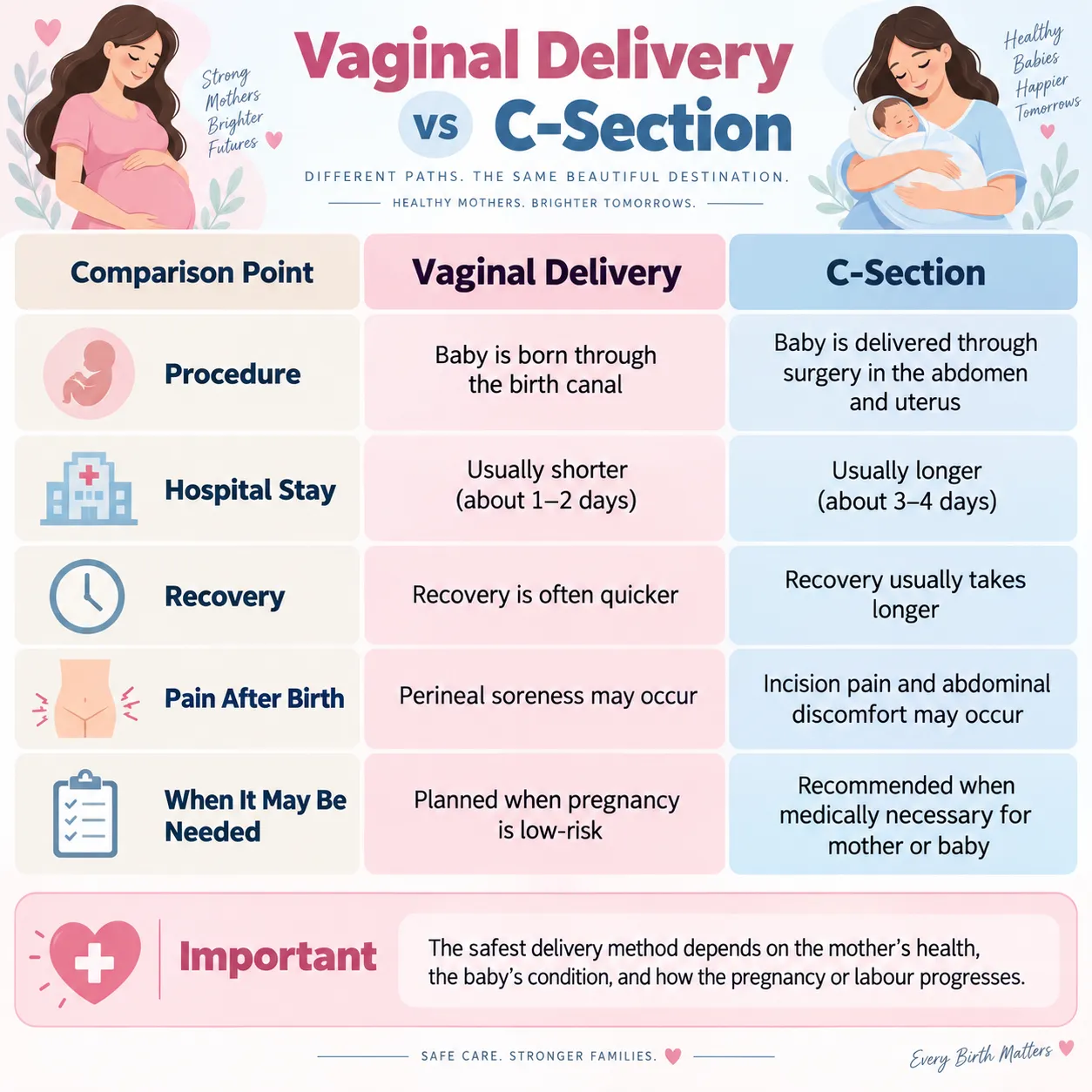
Labour duration varies, especially for first-time mothers. Pain-relief options such as an epidural may be discussed beforehand, and recovery is generally faster than after a C-section.
The safest delivery plan is the one that responds to the mother’s health, the baby’s condition, and how the pregnancy is progressing.
What Happens During a C-Section?
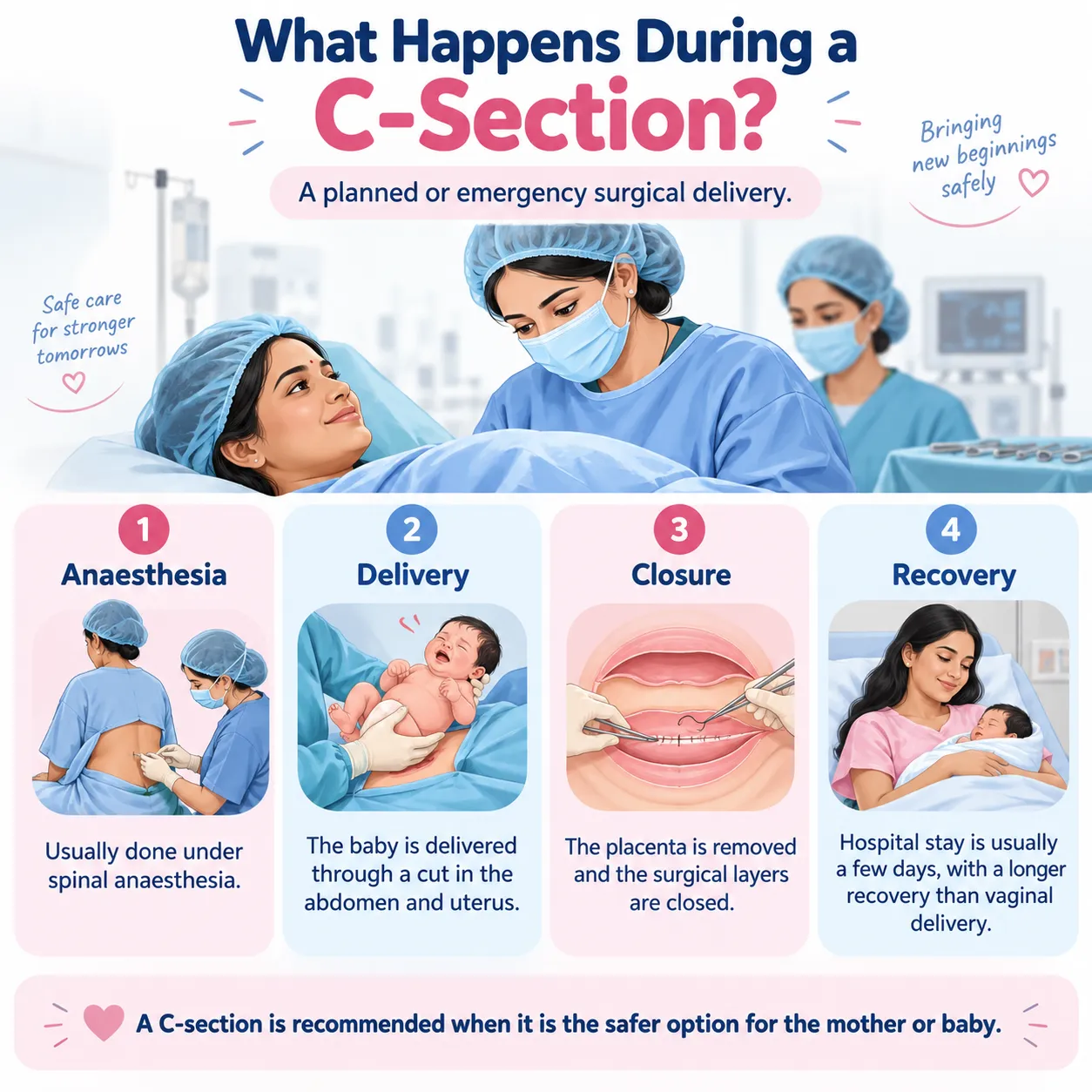
A C-section is a surgical delivery usually performed under spinal anaesthesia. The baby is delivered through incisions in the abdomen and uterus, after which the placenta is removed, and the surgical layers are closed.
Recovery generally takes longer than after a vaginal birth, with a hospital stay of a few days. A C-section may be recommended when it is considered the safer option for the mother or baby.
Planned vs Emergency C-Section
Vaginal delivery and C-section are both safe birth options when chosen based on the mother’s health, the baby’s condition, and how labour progresses.
A delivery plan can change during labour, and timely decisions are often what help keep both mother and baby safe.
When Might a C-Section Be Recommended?
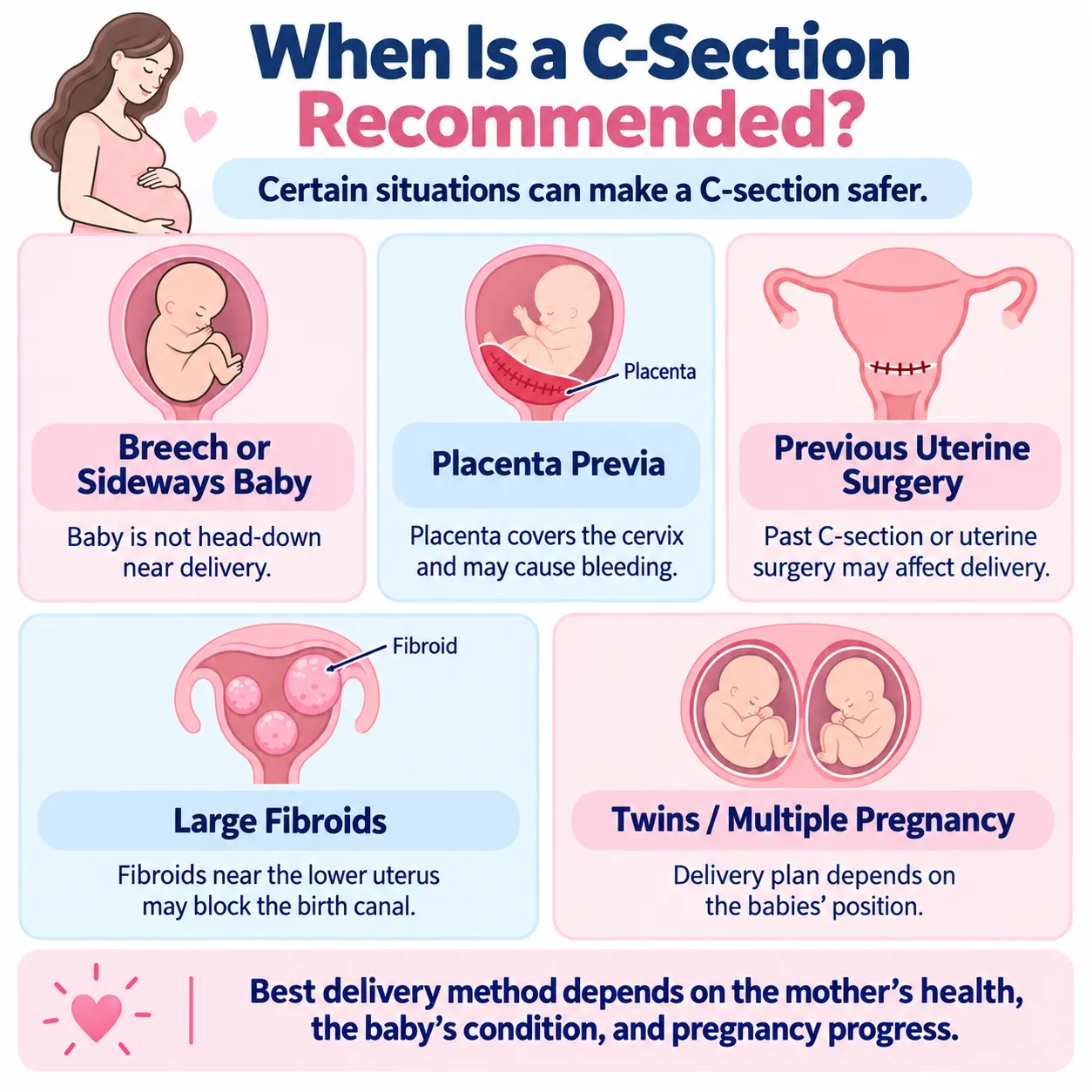
A C-section may be recommended when vaginal delivery could be less safe for the mother or baby. Common reasons include a breech or sideways baby, placenta previa, previous uterine surgery, large fibroids near the lower uterus, or multiple pregnancy, depending on the babies’ positions.
When Is a Normal Delivery Usually Possible?
A vaginal delivery may be planned when the baby is in a suitable position, the placenta is not blocking the cervix, and there are no significant concerns that make labour unsafe.
Even pregnancies that need closer monitoring can sometimes end in a vaginal birth.
For example, women with well-controlled blood pressure or pregnancies conceived through IVF may still be suitable for a normal delivery if there are no other medical concerns.
Can You Have a Normal Delivery After a Previous C-Section?
For some women, yes.
After one previous C-section, a trial of labour after caesarean may be considered.
This is commonly referred to as VBAC, or vaginal birth after caesarean.
Whether VBAC is suitable depends on factors such as the type of previous uterine scar, the reason for the earlier C-section, the current pregnancy, and access to emergency surgical care if needed.
How Does Your Doctor Decide?
The delivery plan usually takes shape during routine antenatal check-ups.
Your doctor may consider:
- Mother’s overall health
- Baby’s growth and position
- Placenta position
- Previous pregnancies or uterine surgery
- Any pregnancy-related complications
By the final weeks, there is often a likely delivery plan. However, it may change during labour if progress slows or the baby shows signs of distress.
Some women may also discuss a planned C-section because of labour anxiety or a difficult previous birth.
Recovery After Normal Delivery vs C-Section
Recovery is different for every woman, but the overall pattern is usually different between the two methods.
After a Vaginal Delivery
You may experience:
- Vaginal bleeding
- Perineal soreness
- Discomfort from stitches, if required
- Tiredness during the first few days
Many women gradually return to light daily activities relatively soon, although complete recovery varies.
After a C-Section
Recovery usually takes longer because the body is healing from abdominal surgery.
You may need to:
- Keep the incision clean and dry
- Avoid heavy lifting
- Limit strenuous activity
- Follow advice about driving and exercise
- Watch for signs of wound infection
Recovery after a C-section commonly takes several weeks.
Contact your doctor if you develop fever, increasing wound pain, redness, discharge, heavy bleeding, shortness of breath, or any symptom that feels unusual.
FAQs
Is normal delivery safer than a C-section?
For low-risk pregnancies, normal delivery is often preferred, while a C-section may be safer when medical risks are present.
How long does recovery take after a C-section?
C-section recovery usually takes around six weeks or longer, depending on individual health and healing.
Can I choose a C-section without a medical reason?
Yes, but the benefits, risks, recovery, and future pregnancy impact should be discussed with your obstetrician.
Can I have a normal delivery after a previous C-section?
Some women may be suitable for VBAC depending on the uterine scar, pregnancy history, and emergency care availability.
Does a C-section cost more than a normal delivery?
Yes, C-section costs are usually higher due to surgery, anaesthesia, and a longer hospital stay.