
When pregnancy doesn’t happen despite months of trying, finding the reason can be frustrating. Most fertility evaluations begin with blood tests, ultrasound scans, semen analysis, and tests to check whether the fallopian tubes are open. However, some fertility conditions may not be clearly visible through these tests.
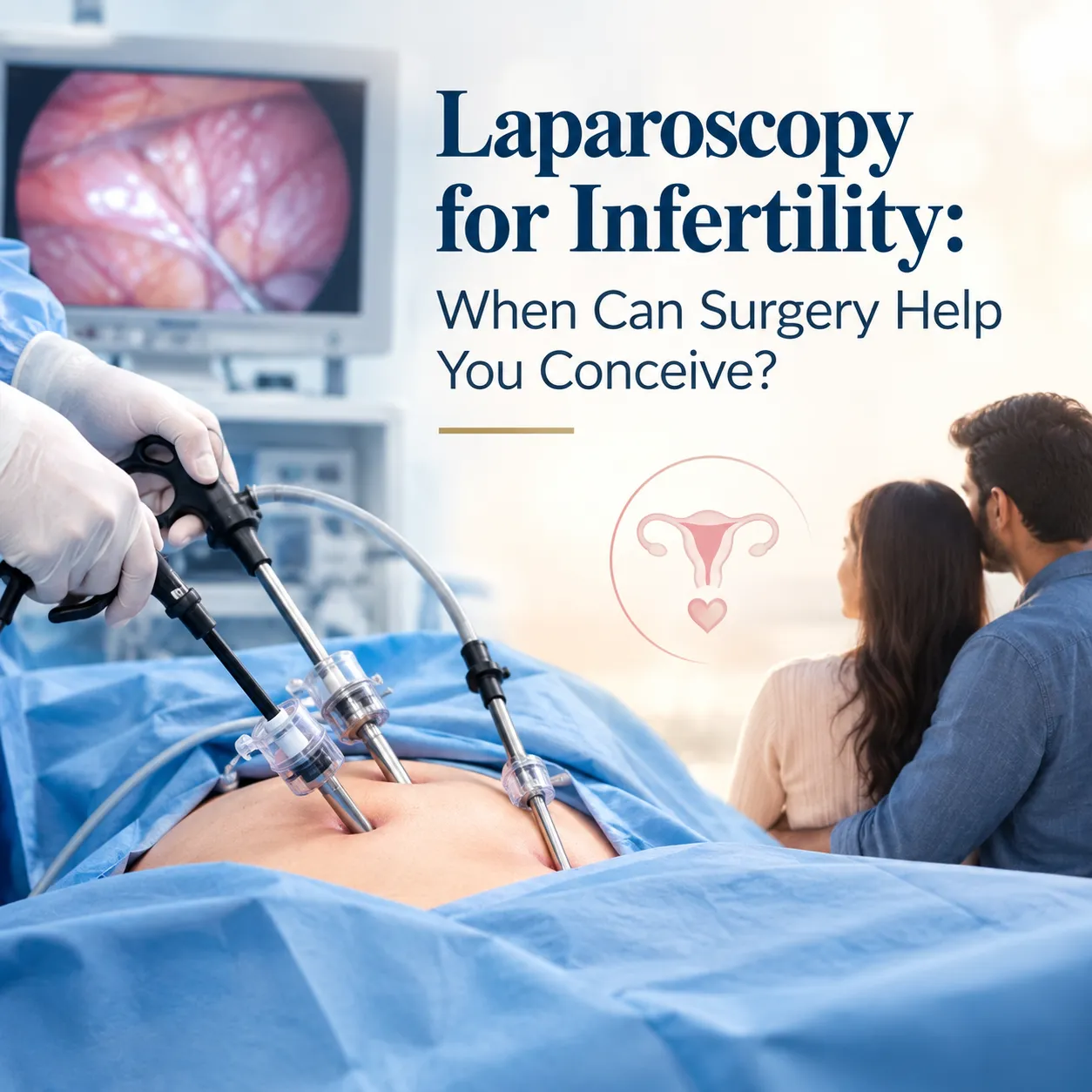
Laparoscopy for infertility is a minimally invasive surgical procedure that allows a gynecologist to examine the uterus, ovaries, fallopian tubes, and surrounding pelvic structures. It can help identify conditions such as endometriosis, pelvic adhesions, and tubal damage. In some cases, doctors can also treat these problems during the same procedure.
How Does the Laparoscopy Procedure for Infertility Work?
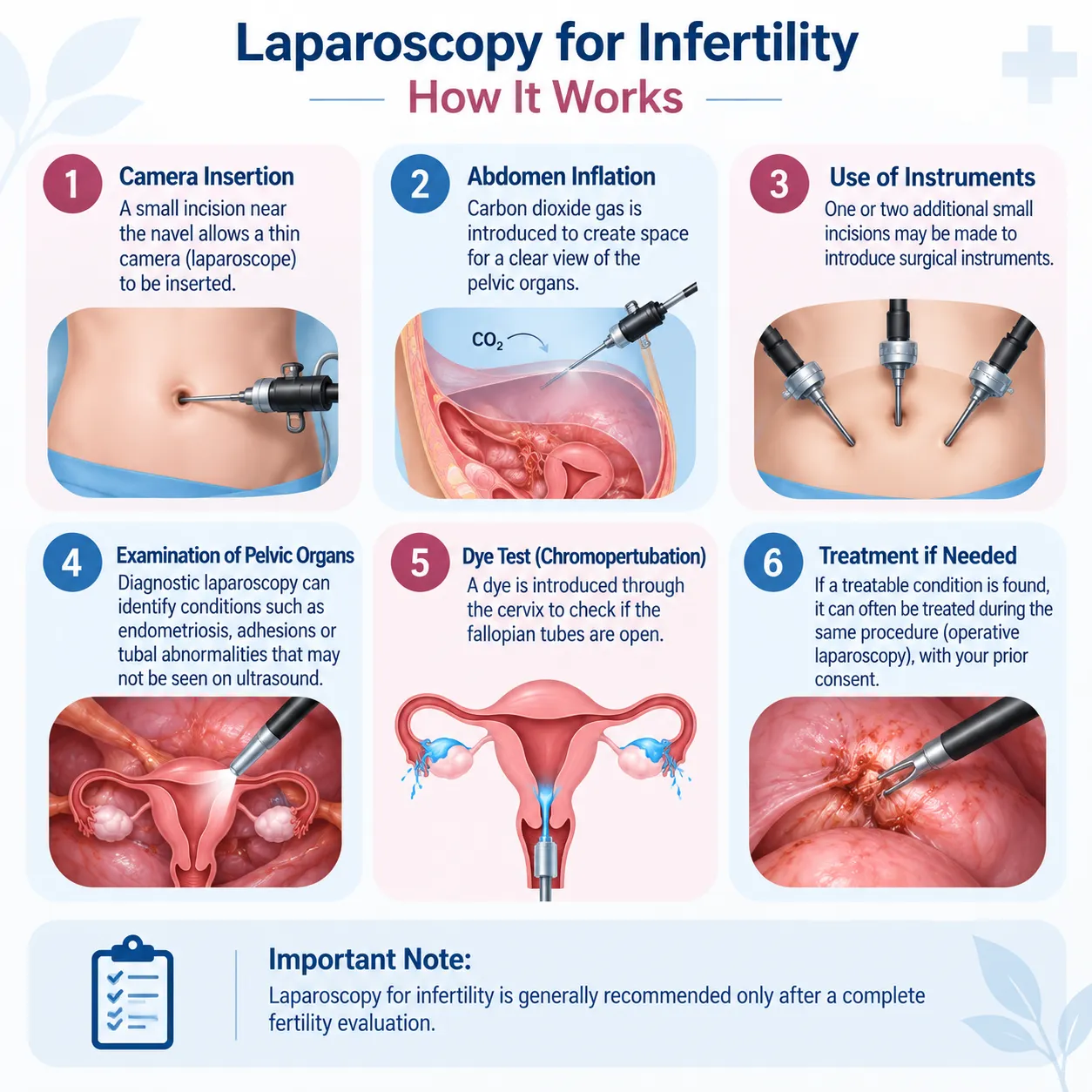
Laparoscopy for infertility is a minimally invasive procedure used to examine the reproductive organs, check fallopian tube blockages, and identify conditions such as endometriosis and pelvic adhesions. When appropriate, certain fertility-related conditions can also be treated during the same procedure.
What Fertility Problems Can Laparoscopy Diagnose and Treat?
Laparoscopy for infertility can help diagnose and manage conditions such as endometriosis, blocked fallopian tubes, pelvic adhesions, uterine fibroids, ovarian cysts, and selected cases of PCOS. This minimally invasive procedure may help address certain fertility-related problems, depending on individual medical findings and treatment needs.
When Is Laparoscopy Recommended for Infertility?
A gynecologist may consider laparoscopy when:
- An HSG or ultrasound suggests blocked fallopian tubes, hydrosalpinx, or another pelvic abnormality.
- Severe menstrual pain or painful intercourse raises suspicion of endometriosis.
- Previous pelvic infections or abdominal surgery suggest possible adhesions.
- An ovarian cyst or fibroid requires surgical assessment or treatment.
- Infertility remains unexplained, and additional findings suggest that pelvic surgery may change the treatment plan.
Laparoscopy is not necessary for every woman facing infertility. It is considered when we suspect conditions such as endometriosis, blocked fallopian tubes, or pelvic adhesions that may affect the chances of conception.
Dr. Bhoomika Jain, Gynecologist & Fertility Specialist, Mumbai
When Laparoscopy May Be Recommended
A gynecologist may consider laparoscopy when:
- An HSG or ultrasound suggests blocked fallopian tubes, hydrosalpinx, or another pelvic abnormality.
- Severe menstrual pain or painful intercourse raises suspicion of endometriosis.
- Previous pelvic infections or abdominal surgery suggest possible adhesions.
- An ovarian cyst or fibroid requires surgical assessment or treatment.
- Infertility remains unexplained, and additional findings suggest that pelvic surgery may change the treatment plan.
Laparoscopy is not necessary for every woman facing infertility. It is considered when we suspect conditions such as endometriosis, blocked fallopian tubes, or pelvic adhesions that may affect the chances of conception.
Dr. Bhoomika Jain, Gynecologist & Fertility Specialist, Mumbai
When Laparoscopy May Not Be Necessary
- Ovulation problems can be managed with ovulation induction.
- Fertility investigations do not suggest a pelvic condition requiring surgery.
- Significant male-factor infertility makes IVF with ICSI a more appropriate option.
- Advanced reproductive age or reduced ovarian reserve makes avoiding unnecessary delays particularly important.
For some couples, IUI treatment or IVF may provide a more suitable pathway than surgery. The aim is to select the treatment most likely to help, rather than perform additional procedures without a clear indication.
Understanding the underlying cause of infertility is the first step. A fertility evaluation with Dr. Bhoomika Jain can help identify suitable treatment options.
What Is the Recovery Time After Infertility Laparoscopy?
Recovery after laparoscopy is generally faster than after open abdominal surgery, but it depends on the extent of treatment performed.
Common temporary symptoms include:
- Mild abdominal discomfort or cramping
- Bloating caused by the gas used during surgery
- Shoulder-tip pain
- Tiredness during the first few days
- Mild soreness around the incision sites
How Soon Can You Conceive After Laparoscopy?
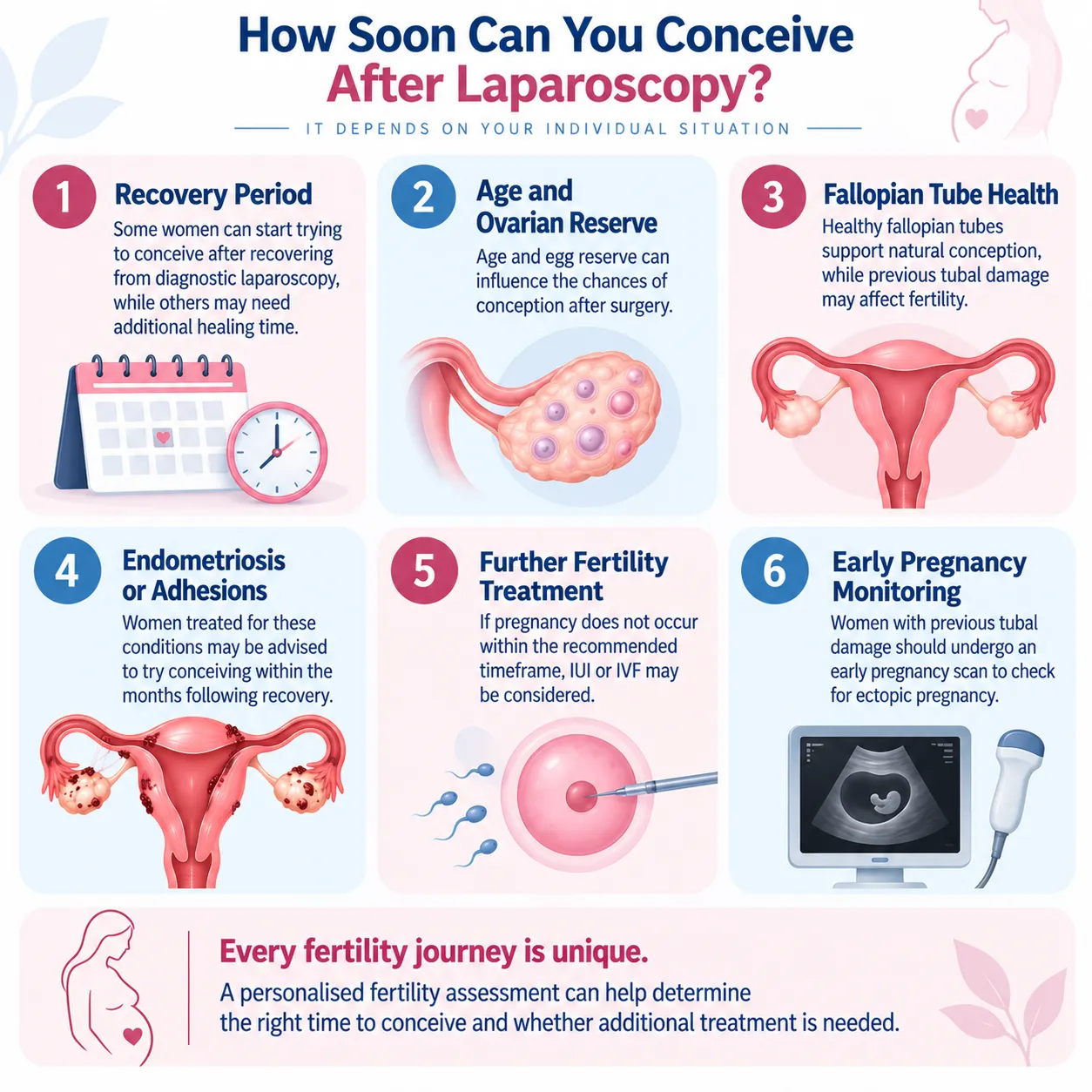
However, laparoscopy does not guarantee pregnancy. If conception does not occur within an individually agreed timeframe, further fertility treatment, including IUI or IVF, may be discussed.
Women with a history of tubal damage should also be aware of the increased risk of ectopic pregnancy. An early pregnancy scan is important once pregnancy is confirmed.
Planning Pregnancy After Laparoscopy?
The right recovery and fertility plan can make a difference. Personalised guidance from a fertility specialist can help determine your next steps toward conception.
What Are the Risks and Limitations of Laparoscopy for Infertility?
Possible risks include:
- Bleeding or infection
- Reactions or complications related to anaesthesia
- Injury to the bowel, bladder, or blood vessels
- Formation of new adhesions
- Possible reduction in ovarian reserve after certain ovarian procedures
- Rarely, conversion to open surgery
Frequently Asked Questions About Laparoscopy for Infertility
Can laparoscopy improve my chances of getting pregnant?
Yes, laparoscopy may improve conception chances by treating conditions such as endometriosis or pelvic adhesions.
How long after laparoscopy can I try to conceive?
You may start trying after recovery, depending on the surgery performed and your gynecologist’s advice.
Is laparoscopy for infertility painful?
Laparoscopy is performed under general anaesthesia, although mild pain, bloating, or discomfort may occur afterward.
How much does laparoscopy for infertility cost in Mumbai?
The cost depends on the hospital, surgeon’s fees, anaesthesia, and complexity of the procedure.
Is laparoscopy necessary before IVF?
No, laparoscopy is not routinely required before IVF unless specific pelvic conditions need evaluation or treatment.