
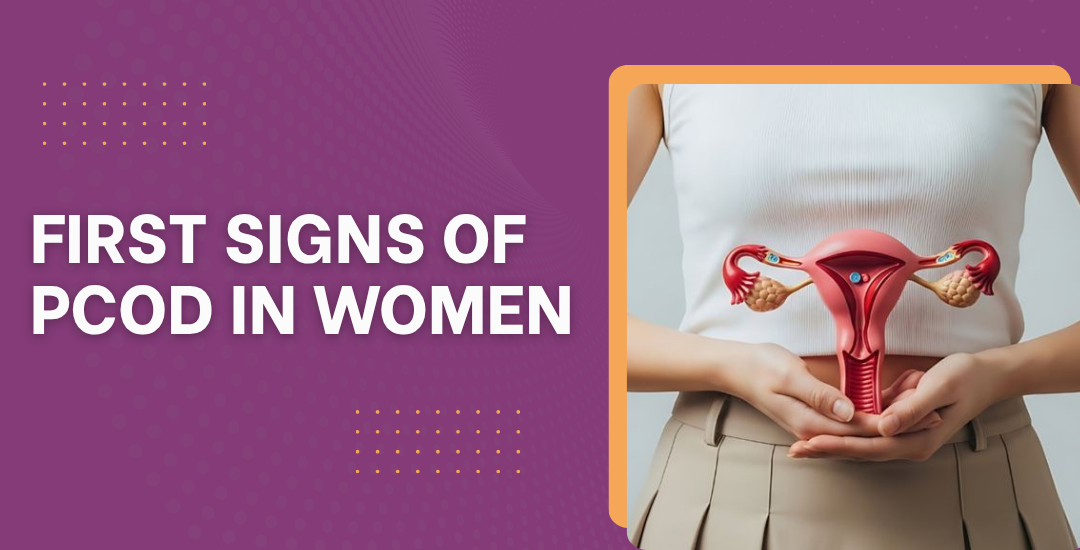
Periods are the first thing to go. They stretch out, skip a month, show up when they feel like it. That’s usually the opening sign. The rest follows slowly. Acne that just won’t quit. Weight creeping on around the middle even when nothing about your eating changed. Hair thinning up top, and then, oddly, more of it on the chin or upper lip. A few women spot dark velvety patches on the neck and don’t think much of it. All of this traces back to one thing. The ovaries are pumping out more male hormones than they should, and the body starts showing it.
According to Dr. Bhoomika Jain, a leading gynecologist in Marine Lines, “The earliest clue is almost always the menstrual cycle, and by the time skin or weight changes appear, the hormones have usually been off for a while.”
Which early symptoms point to PCOD?
Most early signs trace back to one source, hormones tipping out of balance.
Periods: This is usually where it begins. Longer gaps between cycles, a missed month, or flow that turns suddenly heavier or lighter.
Acne: Not the teenage kind that fades. It lingers, clusters along the jaw and chin, and resists most creams.
Weight: It tends to settle around the belly. Intake hasn’t changed, yet it appears anyway, and proves stubborn to lose.
Hair: A two-sided issue. Thinning on the scalp while growing where it isn’t wanted, the chin, lip, sometimes the cheeks.
Caught early, these are far easier to manage, which is the case for starting PCOD treatment sooner rather than later.
When should you see a doctor about these signs?
One irregular period isn’t a diagnosis. Several of these together is the real signal.
Timing: Three erratic or missed cycles in a row. That’s the point to stop waiting.
Combination: A single symptom is easy to overlook. Irregular periods alongside acne and unexplained weight gain is a different matter.
Fertility: For some women, difficulty conceiving is the first clear warning, especially when cycles were never regular.
Family: A mother or sister with PCOD raises your risk, so early signs deserve attention.
A scan and a hormone panel confirm it quickly, and when the cycle itself is the core issue, treating the underlying menstrual disorder is usually where care begins.
Why Choose Dr. Bhoomika Jain?
Dr. Bhoomika Jain is an Obstetrician, Gynaecologist, and IVF Specialist with over nine years of experience and a Fellowship in Assisted Reproductive Techniques from KEM Hospital, Mumbai. She has identified PCOD early in teenagers and managed it for women who had missed the signs for years.
Nothing is rushed. The cause is established first, followed by a plan shaped around your cycle, your skin, and your goals. No two PCOD cases are treated the same way.
Periods slipping out of rhythm lately?
FAQs
Q1: At what age do PCOD signs usually start?
PCOD signs often appear in the late teens or early twenties, soon after periods begin.
Q2: Can PCOD signs appear without weight gain?
Yes, lean women can have PCOD with irregular periods, acne, or hair changes.
Q3: Are irregular periods always a sign of PCOD?
No, several conditions cause this, so a scan and hormone test confirm it.
Q4: Do PCOD signs go away on their own?
No, symptoms need management, though lifestyle changes improve them significantly.