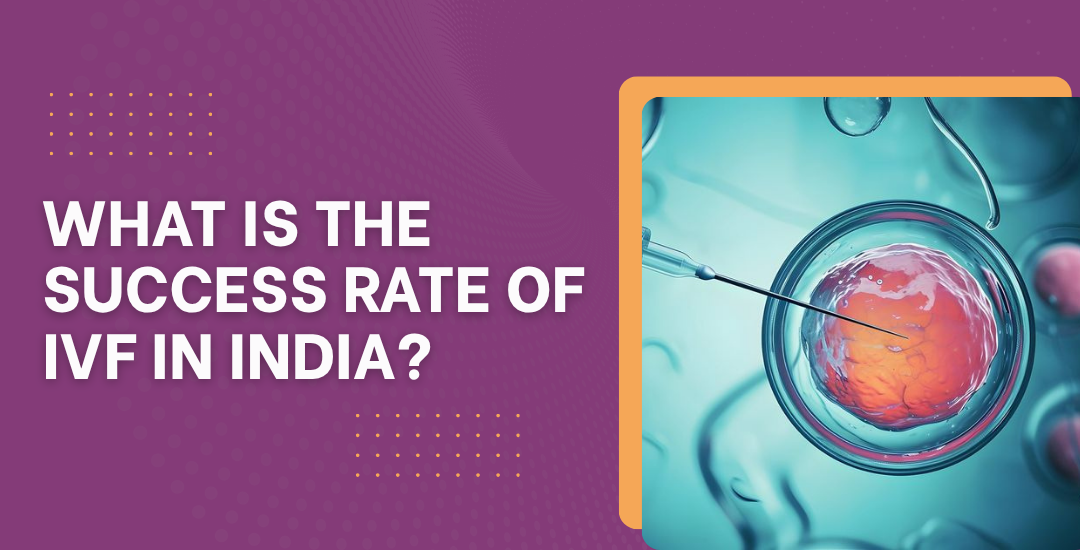
Age decides most of it. For women under 35, the live birth rate per cycle in good clinics sits around 45 to 55 percent. That slips to roughly 30 to 35 percent between 35 and 37. After 40, using your own eggs, it drops well into the low teens. Donor eggs change the picture, pushing success back up regardless of the recipient’s age. And one cycle isn’t the whole story, three cycles stacked together lift the cumulative odds considerably. So there’s no single number. It bends around your age, your egg quality, the lab, and what’s causing the infertility in the first place.
According to Dr. Bhoomika Jain, a gynecologist in Marine Lines, “The single most honest IVF figure is the live birth rate per cycle for your age group, not the clinical pregnancy rate clinics often quote, because the two can differ quite a lot.”
What affects your IVF success rate?
No two cases carry the same odds. A handful of factors do most of the deciding.
Age: The biggest one by far. Egg quality and quantity fall with age, so success drops steadily after 35 and faster past 40.
Egg and sperm quality: Healthy eggs and sperm give embryos the best start, and poor quality on either side lowers the odds noticeably.
Embryo health: A genetically normal embryo implants far more reliably, which is why screening sometimes helps in older patients.
Clinic standards: Lab quality and the embryology team matter more than people think. The same patient can see different results elsewhere.
Sorting the underlying cause first is key, and proper infertility treatment often improves the odds before IVF even begins.
How can you improve your chances of success?
Some things sit outside your control. Plenty don’t, though.
Act early: Time matters more than almost anything. Starting younger, or sooner after problems appear, simply gives better odds.
Plan multiple cycles: One attempt rarely tells the full story. Thinking in terms of two or three cycles sets more realistic expectations.
Treat root issues: Conditions like PCOD or fibroids can quietly lower success, so handling them first often pays off.
Stay healthy: Weight, smoking, and overall health all feed into the result, on both partners’ sides, not just the woman’s.
Where ovulation is the problem, knowing whether you can get pregnant naturally with PCOD often shapes the chances before a cycle starts.
Why Choose Dr. Bhoomika Jain?
Dr. Bhoomika Jain is an Obstetrician, Gynaecologist, and IVF Specialist with over nine years of experience and a Fellowship in Assisted Reproductive Techniques from KEM Hospital, Mumbai. She has guided couples through IVF across a wide range of ages and fertility challenges.
Expectations are set honestly here, with real age-specific figures rather than inflated promises. The underlying cause is treated first, and each plan is built around your body, your history, and your goals. No false hope, just a clear path.
Trying to weigh up whether IVF is the right step for you?
FAQs
Q1: Does IVF success drop with age?
Yes, IVF success declines with age, dropping notably after 35 and more sharply past 40.
Q2: Can multiple IVF cycles improve success?
Yes, cumulative success over two or three cycles is higher than a single attempt.
Q3: Do donor eggs raise IVF success?
Donor eggs often improve success for older women, as egg quality is the key factor.
Q4: What affects IVF success besides age?
Egg and sperm quality, embryo health, uterine lining, and lab standards all affect outcomes.