
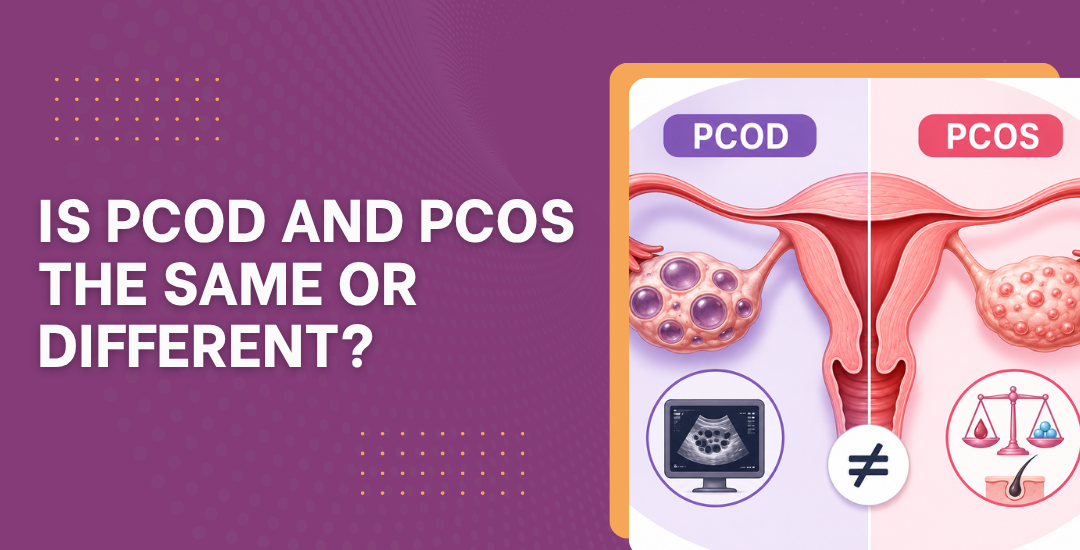
PCOD and PCOS are not the same. In PCOD, the ovaries retain multiple immature eggs that develop into small cysts. PCOS is broader. It is a metabolic disorder that affects hormones, weight, and blood sugar, not the ovaries alone. PCOD is the more common and milder condition. PCOS is less common but requires closer monitoring due to its long-term health risks.
According to Dr. Bhoomika Jain, an experienced gynecologist in Marine Lines, “Most women use both terms like they mean one thing, but PCOS needs far closer monitoring because it touches metabolism, not just the ovaries.”
How are PCOD and PCOS actually different?
Both show cysts on a scan. The cause behind them is different.
| Feature | PCOD | PCOS |
| Nature | Ovarian condition | Metabolic, hormonal disorder |
| Severity | Milder, manageable | More serious, systemic |
| How common | Very common | Less common |
| Fertility impact | Usually mild | Often significant |
| Main trigger | Hormone imbalance | Insulin resistance |
Cause: PCOD stems mainly from a hormonal imbalance. PCOS is driven by insulin resistance, which pushes the body to produce excess male hormones.
Ovaries: In PCOD, partly matured eggs remain in the ovaries. In PCOS, the eggs often fail to release at all, which is where ovulation stalls.
Body impact: This is the key difference. PCOS extends beyond the ovaries into weight, blood sugar, and heart health. PCOD usually stays confined to the reproductive system.
Fertility: PCOD often responds to small lifestyle changes. PCOS is harder to manage and may need medical support to conceive.
Early diagnosis makes the distinction clear quickly, and effective PCOD treatment depends on identifying which condition you have.
Which symptoms should make you see a doctor?
Some signs overlap between the two. Others point more clearly to one.
Periods: Irregular or skipped cycles occur in both. When weight gain accompanies them, it usually points toward PCOS.
Weight: Rapid weight gain that resists diet is typical of PCOS. PCOD-related weight is generally easier to manage.
Skin and hair: Acne, oily skin, and facial hair appear in both, though they tend to be more pronounced in PCOS.
Mood: Fatigue and mood swings are common and often dismissed for years. That delay works against you.
A scan and a hormone panel confirm the diagnosis, and women approaching their forties should also note how shifting hormones tie into broader changes like menopause down the line.
Why Choose Dr. Bhoomika Jain?
Dr. Bhoomika Jain is an Obstetrician, Gynaecologist, and IVF Specialist with over nine years of experience and a Fellowship in Assisted Reproductive Techniques from KEM Hospital, Mumbai. She has managed PCOD and PCOS across every stage, from teenagers to women planning a pregnancy.
Diagnosis comes first, confirmed through proper testing rather than assumed from symptoms. Treatment is then built around your body and your goal, whether that is regular cycles or conceiving. Every plan is specific to the patient, never a template.
Not sure which one you’re dealing with?
FAQs
Q1: Can PCOD turn into PCOS over time?
No, they are separate conditions, but untreated PCOD symptoms can worsen and need review.
Q2: Is PCOS more dangerous than PCOD?
Yes, PCOS carries higher risks like diabetes and heart issues if left unmanaged.
Q3: Can I get pregnant with PCOD or PCOS?
Yes, both allow pregnancy, often with lifestyle changes or fertility support.
Q4: Which test confirms PCOD or PCOS?
An ultrasound with a hormone blood panel confirms both conditions accurately.