
Can You Actually Get Your Period After Conception?
Once pregnancy is confirmed, period doesn’t happen again until after delivery. That’s because a period only occurs when the uterine lining sheds, and during pregnancy, that lining is maintained rather than shed.
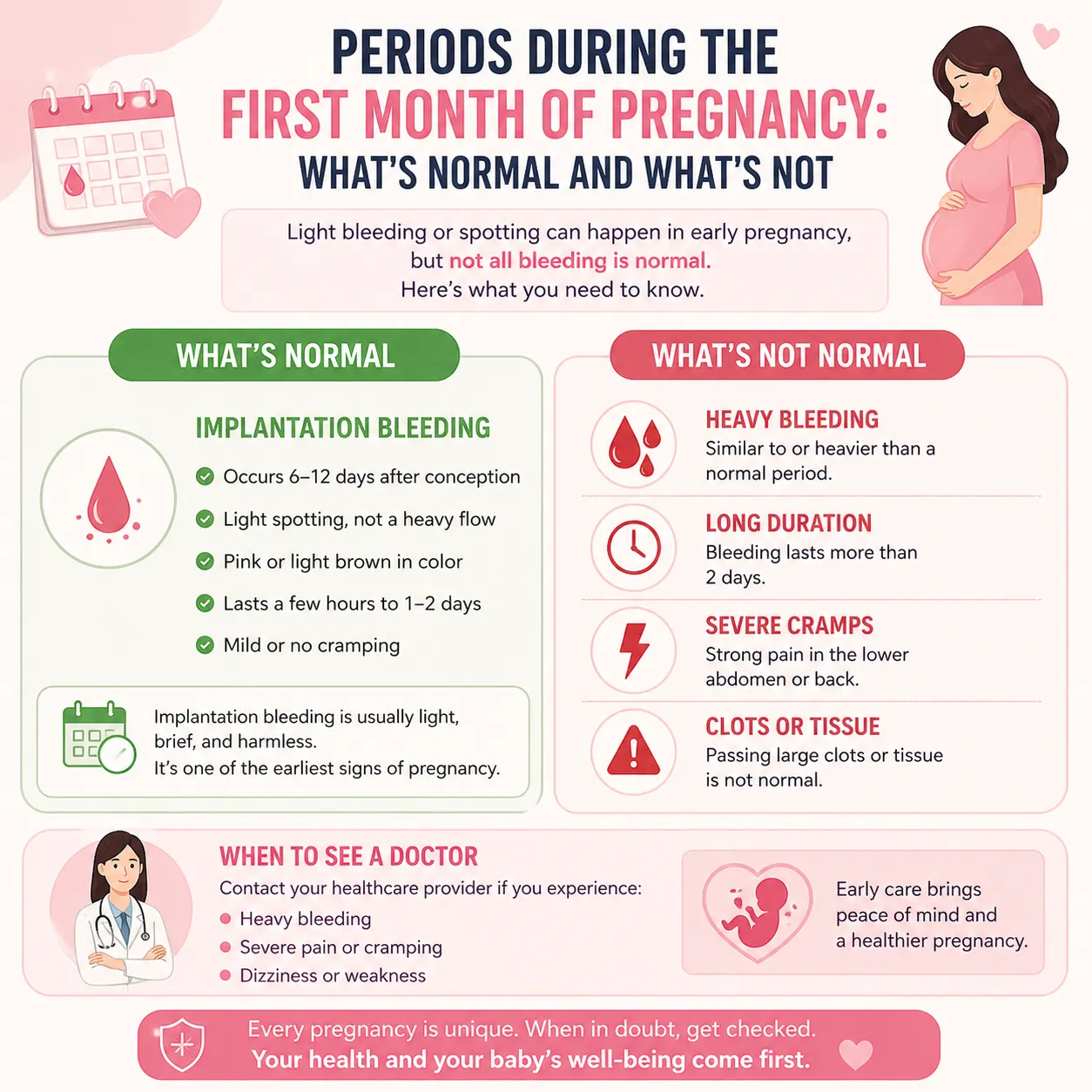
- What feels like a period in early pregnancy is usually one of a few things: implantation bleeding, hormonal spotting, or occasionally, a sign that needs evaluation
- Some women don’t realize a period was missed at all, especially those with an existing menstrual disorder that already makes cycles unpredictable
- This confusion isn’t a sign of missing something obvious early pregnancy bleeding is genuinely inconsistent from person to person
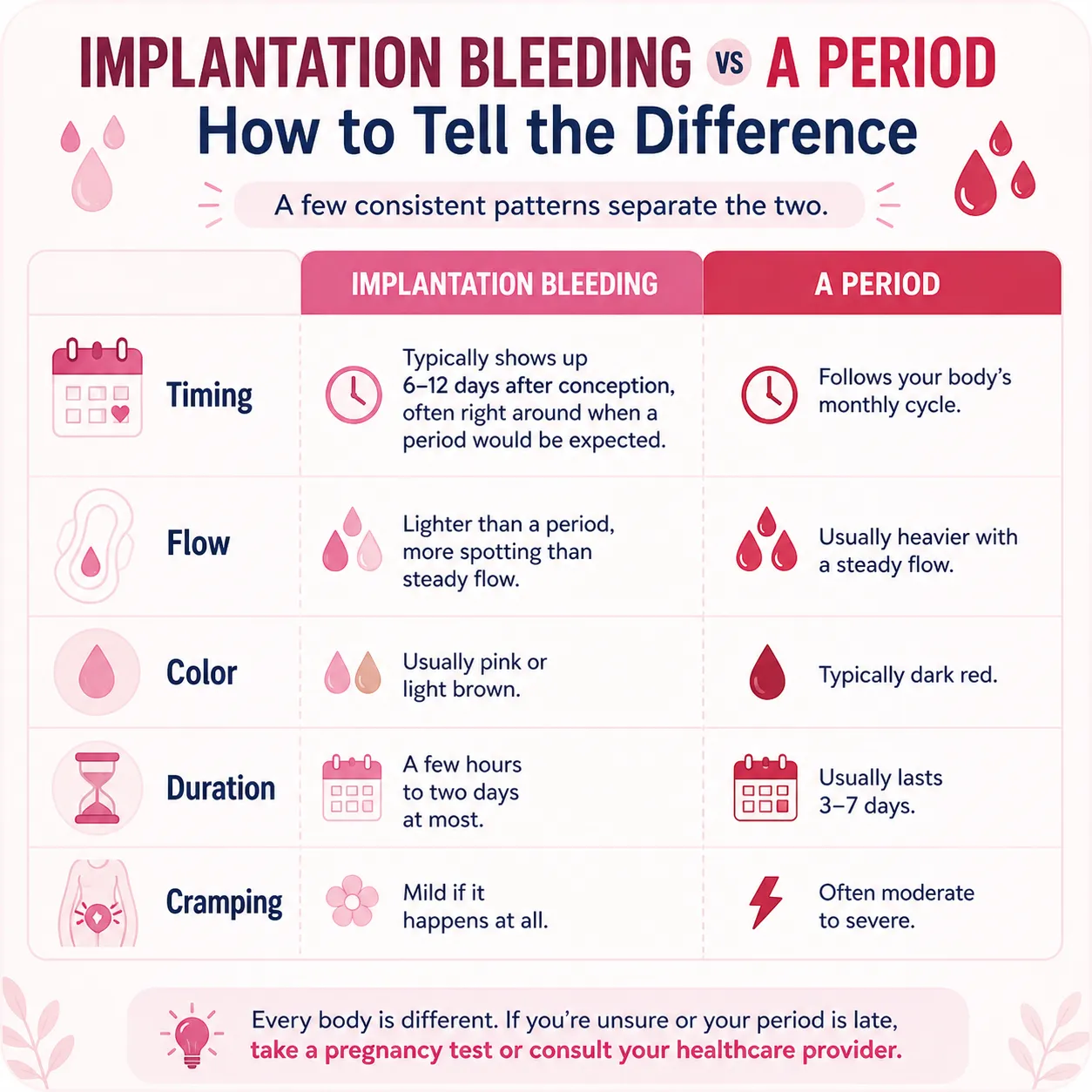
Implantation Bleeding vs a Period How to Tell the Difference
A few consistent patterns separate the two.
- Timing: implantation bleeding typically shows up 6–12 days after conception, often right around when a period would be expected
- Flow: lighter than a period, more spotting than steady flow
- Color: usually pink or light brown, rather than the darker red of a typical period
- Duration: a few hours to two days at most, well short of a normal period’s length
- Cramping: mild if it happens at all
Not every pregnancy comes with noticeable implantation bleeding. Its absence doesn’t mean anything went wrong.
Not Sure If What You’re Experiencing Is Normal?
Bleeding in early pregnancy can mean different things depending on timing and pattern. A quick evaluation can tell you exactly what’s happening.
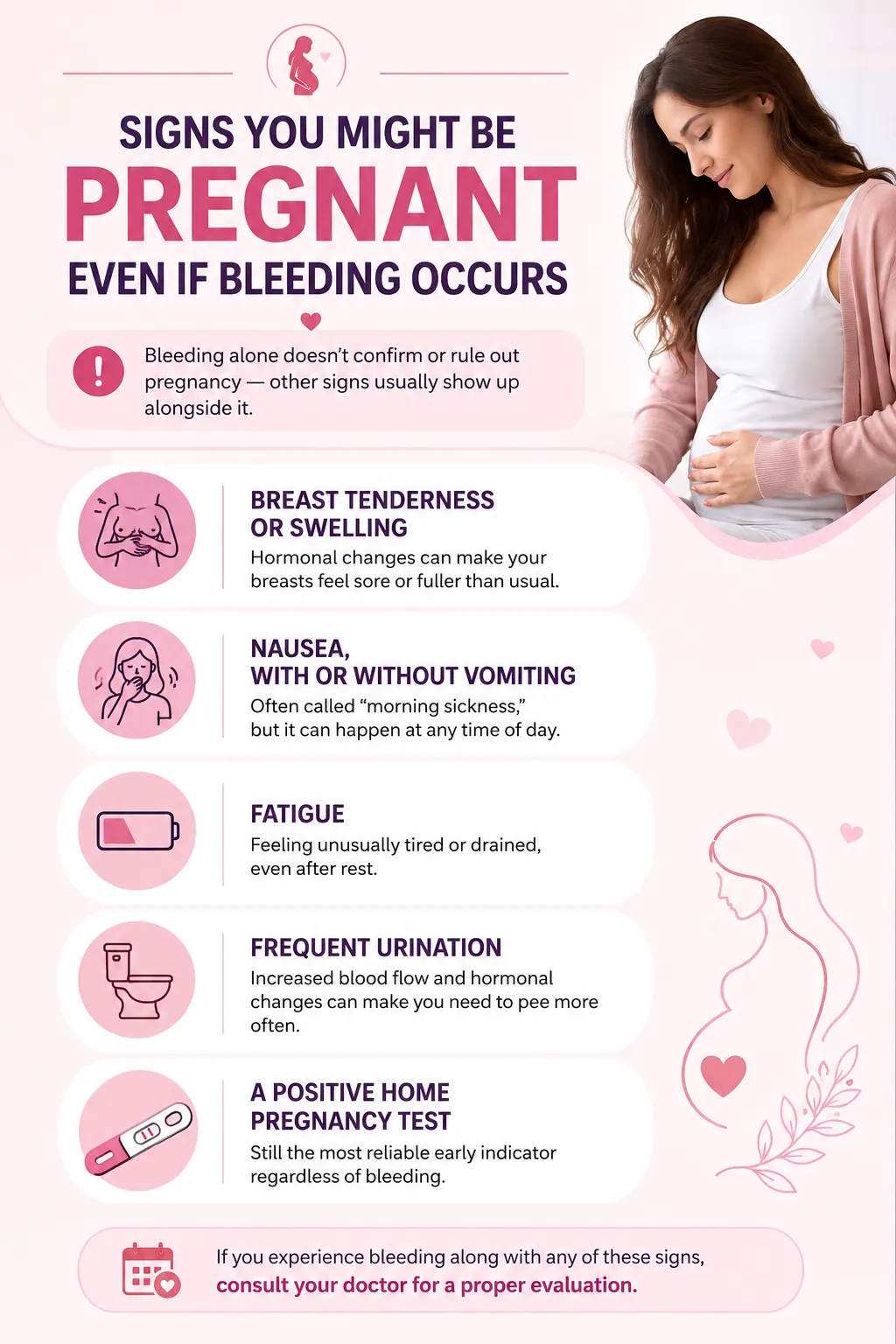
Signs You Might Be Pregnant Even If Bleeding Occurs
Bleeding alone doesn’t confirm or rule out pregnancy other signs usually show up alongside it.
- Breast tenderness or swelling
- Nausea, with or without vomiting
- Fatigue that feels out of proportion to your activity level
- Frequent urination
- A positive home pregnancy test, still the most reliable early indicator regardless of bleeding
“Bleeding confuses a lot of early pregnancy timelines. A positive test combined with an early ultrasound is what actually confirms what’s going on, not the bleeding pattern by itself.”
— Dr. Bhoomika Jain, Gynecologist & Obstetrician
Once pregnancy is confirmed, ongoing pregnancy care typically starts with baseline bloodwork and an early scan to date the pregnancy accurately.
When Bleeding in Early Pregnancy Needs Medical Attention
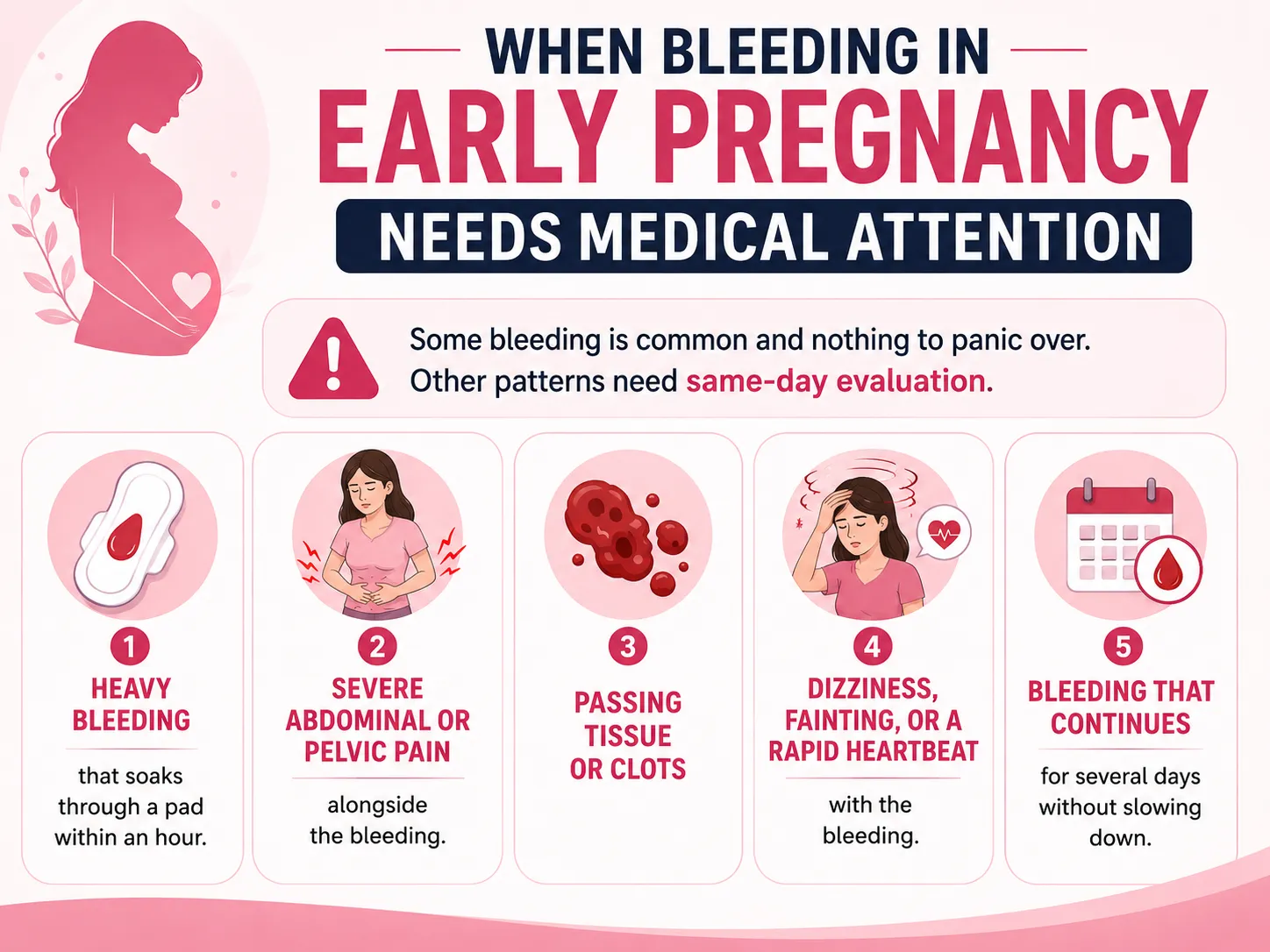
Some bleeding is common and nothing to panic over. Other patterns need same-day evaluation.
- Heavy bleeding that soaks through a pad within an hour
- Severe abdominal or pelvic pain alongside the bleeding
- Passing tissue or clots
- Dizziness, fainting, or a rapid heartbeat with the bleeding
- Bleeding that continues for several days without slowing down
None of this automatically means something has gone wrong. It does mean the situation deserves a prompt look rather than a wait-and-see approach.
Concerned About Bleeding During Early Pregnancy?
Some bleeding is common and harmless, but certain patterns deserve a closer look. Getting checked early gives you clarity and peace of mind.
What to Do If You're Unsure
“A lot of my patients wait a few days hoping it resolves on its own. An early ultrasound and a simple blood test can usually confirm what’s happening within the same visit — there’s rarely a reason to sit with the uncertainty alone.”
— Dr. Bhoomika Jain, Gynecologist & Obstetrician
- Take a home pregnancy test if you haven’t already, ideally a few days after a missed period for accuracy
- Track the bleeding — color, flow, duration, and anything else alongside it
- Don’t assume bleeding rules pregnancy in or out on its own
- If you’ve been managing PCOS, mention it — it affects how bleeding patterns get interpreted, and PCOD/PCOS management history is relevant context for your evaluation
- Reach out for evaluation instead of waiting out multiple cycles to see what happens
Dr. Bhoomika Jain gynecologist in Marine Lines, Mumbai, evaluations like this typically start with a conversation, not a rushed exam the goal is clarity, not just a same-day fix. You can read more about her background and approach on the About Us page.
FAQs
Can you have a period and still be pregnant?
No a true period doesn’t occur during pregnancy, though other types of bleeding can be mistaken for one.
How is implantation bleeding different from a period?
Implantation bleeding is typically lighter, shorter, and pinker or browner in color compared to a regular period.
Is spotting normal in the first month of pregnancy?
Light spotting is common and often harmless, but any bleeding should be mentioned at your first prenatal visit.
When should I worry about bleeding in early pregnancy?
Heavy bleeding, severe pain, or passing tissue are signs that need prompt medical evaluation.
How soon can a pregnancy test confirm pregnancy after a missed period?
Most home tests are accurate from the first day of a missed period, though testing a few days later improves reliability.