
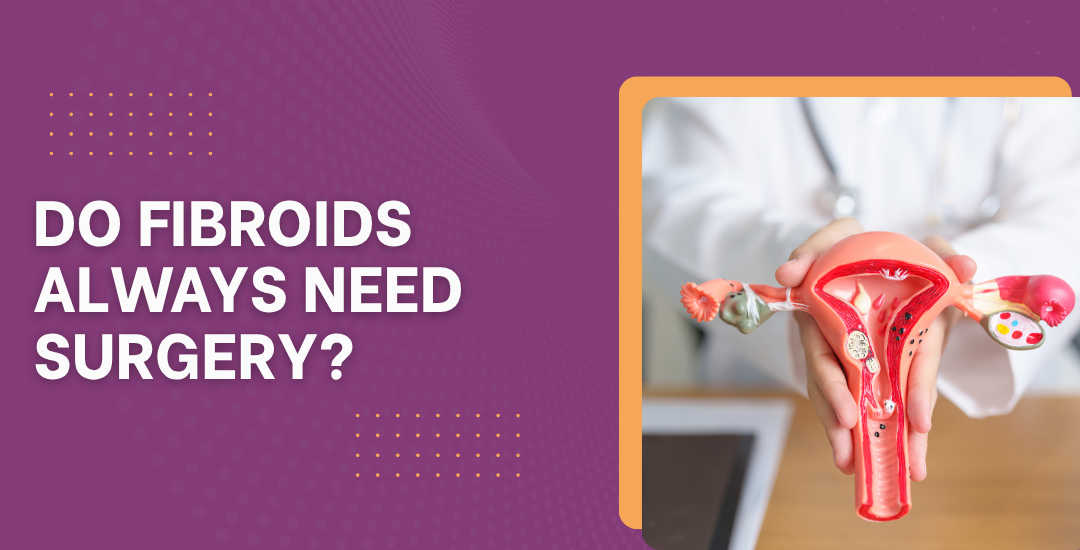
Surgery is not always necessary. Many fibroids stay small, cause no symptoms, and need only yearly monitoring. Treatment depends on their size, location, symptoms, and pregnancy plans. Some are simply observed, others respond to medication. Surgery is needed only when fibroids grow large, bleed heavily, press on the bladder, or affect conception. The fibroid itself is rarely the problem. The symptoms it causes are what matter.
According to Dr. Bhoomika Jain, a Leading gynecologist in Marine Lines, “A fibroid on a scan isn’t an automatic case for surgery, what matters is whether it’s causing symptoms or threatening fertility.”
When can fibroids be managed without surgery?
Many fibroids never require surgery. A few factors keep them under simple observation rather than active treatment.
Size: Small fibroids that aren’t growing usually need only periodic scans to track them, with no medication or procedure required at all.
Symptoms: When there’s no heavy bleeding, no pain, and no pressure on nearby organs, there is generally no medical reason to intervene.
Medication: Hormonal options can reduce bleeding and shrink fibroids over time, though the effect often fades once the medication is stopped.
Menopause: As estrogen levels fall, fibroids tend to shrink naturally, so observation is often enough when menopause is approaching.
For many women, managing the symptoms is all that’s needed, and good fibroids treatment relies on the least invasive option that genuinely works.
When does surgery actually become necessary?
Sometimes observation isn’t enough, and certain situations genuinely call for surgical treatment rather than waiting.
Heavy bleeding: Bleeding that lowers your iron levels or disrupts daily life, and doesn’t respond to medication, is a clear indication for surgery.
Size and growth: Large fibroids, or those growing rapidly, often need removal before they cause further complications or press on other organs.
Pressure: Fibroids pressing on the bladder or bowel can cause frequent urination or constipation, and this persistent discomfort often warrants treatment.
Fertility: A fibroid distorting the uterine cavity can block conception or raise the risk of miscarriage, so removing it may improve the chances of pregnancy.
When heavy bleeding is the main driver, understanding how heavy is too heavy often clarifies whether surgery is truly necessary.
Why Choose Dr. Bhoomika Jain?
Dr. Bhoomika Jain is an Obstetrician, Gynaecologist, and IVF Specialist with over nine years of experience and a Fellowship in Assisted Reproductive Techniques from KEM Hospital, Mumbai. She’s handled fibroids of every kind, the tiny symptomless ones and the large growths that threaten fertility.
Surgery is never the first answer here. Size, symptoms, your pregnancy plans, all of it gets weighed, then the least invasive route that works is the one chosen. An operation gets recommended only when it’s truly the right call, not a moment sooner.
Diagnosed with fibroids and worried surgery is the only way out?
FAQs
Q1: Can small fibroids be left untreated?
Yes, small fibroids without symptoms often need only regular monitoring, not active treatment.
Q2: Do fibroids shrink after menopause?
Yes, fibroids usually shrink after menopause as estrogen levels naturally decline.
Q3: Can medication alone treat fibroids?
Medication can control symptoms and shrink fibroids, but effects are often temporary.
Q4: When is surgery necessary for fibroids?
Surgery is advised for large, fast-growing, or severely symptomatic fibroids affecting daily life.