
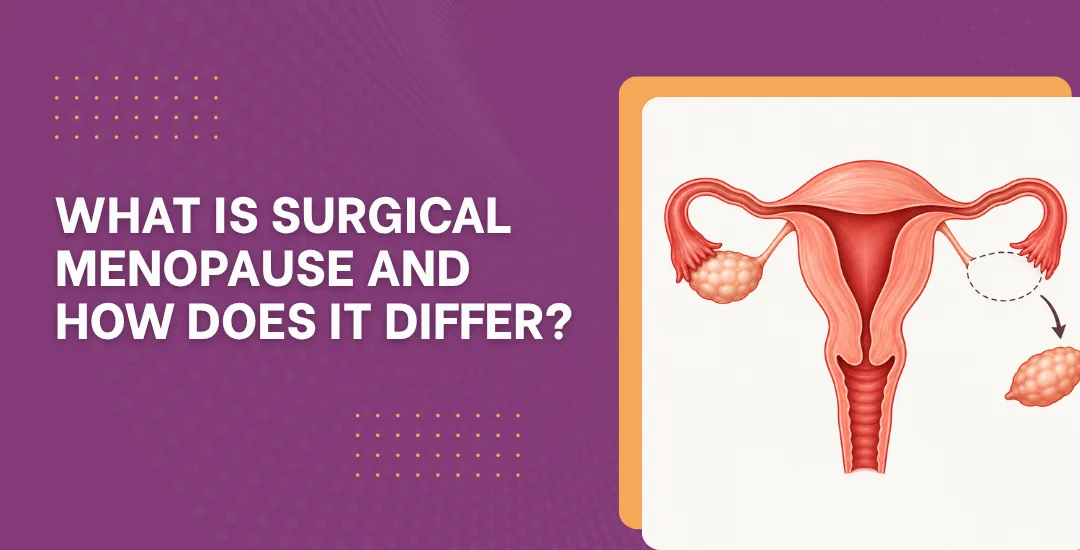
Surgical menopause starts the day both ovaries are removed, in an operation known as a bilateral oophorectomy. There’s no easing-in period, no slow decline. Hormones are flowing one day; the next, ovarian function has stopped entirely. That abrupt halt is the defining difference. Natural menopause gives the body years to settle into the change. This gives it hours. And the symptoms usually reflect that, arriving quicker and landing harder than women tend to expect.
According to Dr. Bhoomika Jain, one of the leading gynecologist in Marine Lines, “The key thing with surgical menopause is the suddenness. Estrogen doesn’t taper, it drops in a single step, so symptoms tend to be more intense early on. That’s exactly why planning for it ahead of surgery matters.”
How Does Surgical Menopause Differ From Natural Menopause?
It all traces back to one thing: speed.
- Sudden onset: Natural menopause takes years. Remove both ovaries and estrogen collapses within a day, so the symptoms turn up fast rather than drifting in.
- Stronger early symptoms: So steep a drop tends to make hot flashes, mood changes, and restless sleep more pronounced in those first weeks than nature would.
- Younger age at onset: Many women who have this surgery are still years short of the usual menopause age. Their estrogen goes early, well ahead of schedule.
- No perimenopause phase: No gradual warning. None of the irregular cycles that normally flag menopause on its way. It just begins.
Because the hormonal change is so sudden, lining up menopause treatment around the surgery can take much of the jolt out of it.
What Are the Effects and Downsides of Surgical Menopause?
Lose estrogen in one step and there are real effects to reckon with, though support keeps most of them manageable.
Effect | Why It Happens |
Intense hot flashes | Sharp, immediate estrogen loss |
Bone density decline | Estrogen protects bone strength |
Weight changes | Shifting metabolism and hormones |
Heart health risk | Earlier loss of estrogen’s protection |
- Bone and heart risk: Estrogen shields both your bones and your heart. Strip it away early, and all at once, and the long-term risk to each climbs.
- Weight gain: Plenty of women watch the scale edge upward afterward. Blame the hormonal shift and a metabolism that’s slowed. Common enough, but nothing is set in stone.
- Sexual and emotional changes: Lower estrogen and testosterone can touch libido, mood, and comfort. Brought up openly, each tends to treat well.
- Why hormone therapy often helps: For younger women in particular, hormone therapy steps in to replace what the ovaries no longer make, softening the downsides.
And since desire is one of the areas hit hardest, the earlier piece on why does sex drive change after menopause makes a sensible companion read.
Is Surgical Menopause Permanent, and What Comes Next?
The ovaries are gone, so the change is for keeps. That doesn’t put the symptoms out of reach of treatment, though.
- It doesn’t reverse: No ovaries, no return to natural hormone production. So this is permanent, unlike the temporary pause a handful of treatments cause.
- Hormone therapy as a bridge: Below the natural menopause age, hormone therapy covers the estrogen shortfall until roughly when menopause would have arrived on its own.
- Long-term monitoring: Bone density scans and heart checks matter more here. Because the body’s usual protection drops away sooner, keeping an eye on both pays off.
- Lifestyle support alongside: Weight-bearing exercise, calcium, vitamin D, a balanced plate. Each chips away at the bone and metabolic effects over the years ahead.
Preparing for an oophorectomy and wondering how menopause will change afterward? Knowing what lies ahead makes it easier to plan for.
FAQs
Does surgical menopause ever go away?
It doesn’t. Both ovaries out means the change is fixed for good. Hormone therapy can quiet the symptoms, but ovarian function won’t come back.
How is surgical menopause different from natural menopause?
Natural menopause creeps in over years. The surgical kind begins the day the ovaries are removed, which is why symptoms show up suddenly and often feel stronger.
Do you gain weight after surgical menopause?
Many women do. A slower metabolism plus the hormonal shift tilts the odds that way, though diet and activity keep it in hand.
What are the main downsides of surgical menopause?
That sharp estrogen loss raises bone and heart risk, can intensify hot flashes, and may affect mood and libido. Most respond well to treatment.
References:
Disclaimer: This blog is for general educational purposes only and is not a substitute for professional medical advice; please consult your doctor for personal care.