
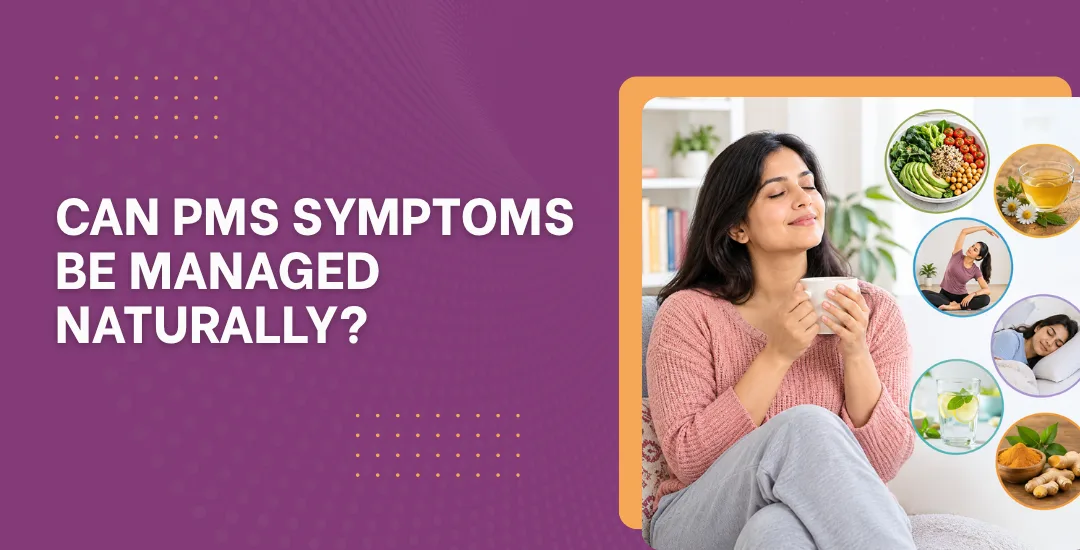
Premenstrual syndrome (PMS) gives way to everyday changes more often than women expect. What goes on your plate, a couple of well chosen vitamins, regular walks, and a little breathing room from stress each take something off the symptoms. Timing matters too, since PMS symptoms management pays off most when it starts around ovulation, before the headaches and the short fuse show up. And PMS management works best when you track your own pattern for a cycle or two.
According to Dr. Bhoomika Jain, a gynecologist in Marine Lines, “PMS isn’t a weakness or a mood problem. It’s a hormonal response, and habits change how hard it hits. Hold small changes for two or three cycles. Then judge.”
What Everyday Habits Actually Help With PMS?
Four things do most of the work. None needs special equipment.
- Eat at regular times: A long gap between meals tends to sharpen irritability, which is why a skipped breakfast can sour a whole afternoon. Whole grains, vegetables, and a bit of protein at each meal keep things steadier. If bloating is the problem, go lighter on salt. If your breasts are tender, coffee and alcohol are worth skipping for a few days. Reaching for chocolate by mid afternoon? Normal. Have it with a few nuts so the sugar crash doesn’t follow.
- Supplements to discuss: Calcium is the one with the firmest evidence behind it. Vitamin B6 and magnesium have been studied as well, but the findings are less certain, mainly for mood swings and bloating. Doses matter, though. B6 in large amounts, taken for months, can damage nerves. Mention anything you plan to take to your doctor before you start.
- Keep moving, gently: Nobody needs a gym membership for this. Half an hour of walking on most days works, and yoga twice a week works too. Mood usually lifts first. Fatigue and cramps tend to follow. Effort isn’t what counts. Showing up is.
- Sleep and stress: The week before a period is when a bad night costs the most, since mood is already running thin. Seven to eight hours is a fair target. Ten minutes of slow breathing before bed helps more women than you’d guess. And a regular bedtime matters more than lying in on Sunday.
Still no change after a few cycles? Menstrual disorder treatment can look at whether a hormonal problem sits behind severe PMS.
When Does PMS Begin, and When Is It Serious?
Most women notice it in the days after ovulation, and it tends to lift once the period gets going. How strongly it hits is a different question.
Aspect | Common PMS | Severe PMS (PMDD) |
Timing | Post ovulation until the period starts | Same window, but much tougher |
Mood | Edgy, weepy, a bit low | Overwhelming anger, hopelessness, or anxiety |
Body | Swelling in the belly, tender breasts, headaches | The same, plus tiredness that gets in the way of daily life |
Daily life | Manageable with habits | Work, studies, or relationships suffer |
Next step | Self care and a symptom log | A doctor’s review and treatment |
- What causes it: After ovulation, estrogen and progesterone levels slide down. Serotonin, a brain chemical involved in mood, seems to be caught up in that shift. Why some women feel it harder isn’t fully understood.
- When it starts: During the luteal phase, which runs from ovulation to the next period. Most women feel better a few days into bleeding. Symptoms that hang around all month? That points somewhere else.
- Signs of severe PMS: If anger or hopelessness starts to interfere with your job or your relationships, take it seriously. It could be PMDD, the severe form, which needs a medical review. Thoughts of self harm need urgent help the same day.
- Track it: Write down mood, energy, and any physical symptoms each day, for two or three cycles. What feels random in the moment often turns out to have a rhythm. Your doctor can also use the record to check for thyroid problems, anemia, or depression.
Cycles gone unpredictable too? Our guide on irregular periods explains the usual causes.
Why Choose Dr. Bhoomika Jain?
Dr. Bhoomika Jain has spent more than nine years in obstetrics, gynecology, and reproductive medicine. She holds an MS and a DNB in Obstetrics and Gynaecology, plus a Fellowship in Assisted Reproductive Techniques from KEM Hospital, Mumbai. For PMS, the first step is a conversation about your symptoms and how your cycles run. Tests follow only when there’s a reason, because thyroid problems and anemia can look just like PMS. After that, the plan is matched to you, whether that’s lifestyle changes, a supplement at a safe dose, or medication for severe symptoms.
Does PMS throw off your work or routine every month?
FAQs
What can I do about PMS mood swings?
Regular meals, movement, and less caffeine are good starting points.
Can supplements help with PMS mood swings?
Some do. Calcium has the best evidence, but check with your doctor first.
When does PMS start in the cycle?
After ovulation, roughly one to two weeks before your period begins.
How should a man deal with a partner’s PMS?
Stay patient, listen without arguing, and help with chores.
References:
Disclaimer: This blog is for general educational purposes only and is not a substitute for professional medical advice; please consult your doctor for personal care.