
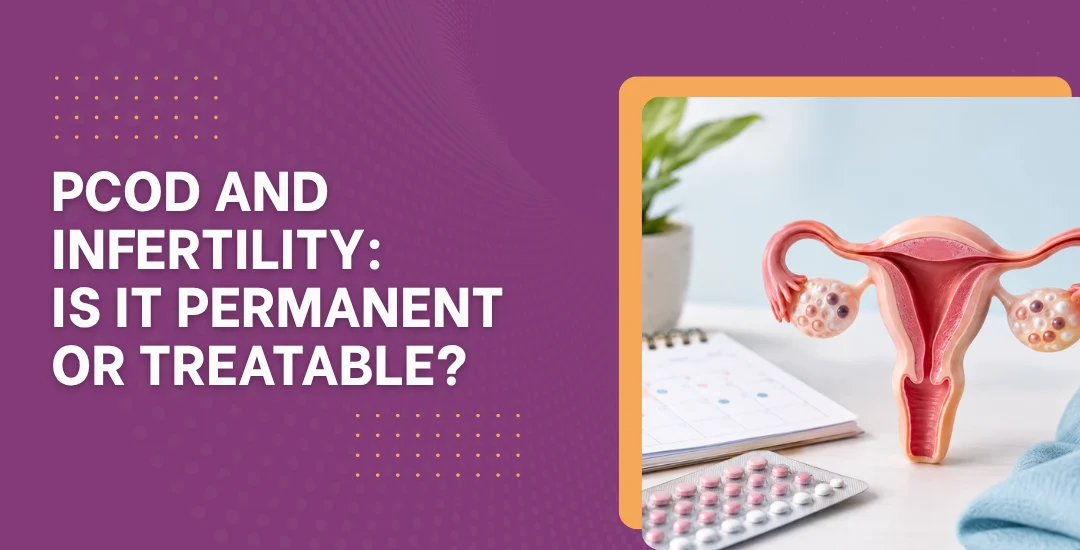
PCOD affects ovulation. Not permanently, not irreversibly, but consistently enough to make conception harder without intervention. Most women with PCOD do conceive. With the right treatment, pregnancy is a realistic outcome, not an exception.
According to Dr. Bhoomika Jain, a gynecologist in Marine Lines, “PCOD-related infertility is largely driven by anovulation, and that’s something we can work with clinically. For most patients, the goal isn’t IVF straightaway. It’s restoring ovulation first and seeing how far that gets us.”
How Does PCOD Affect Fertility in the First Place?
The ovulation piece is central. Everything else follows from that.
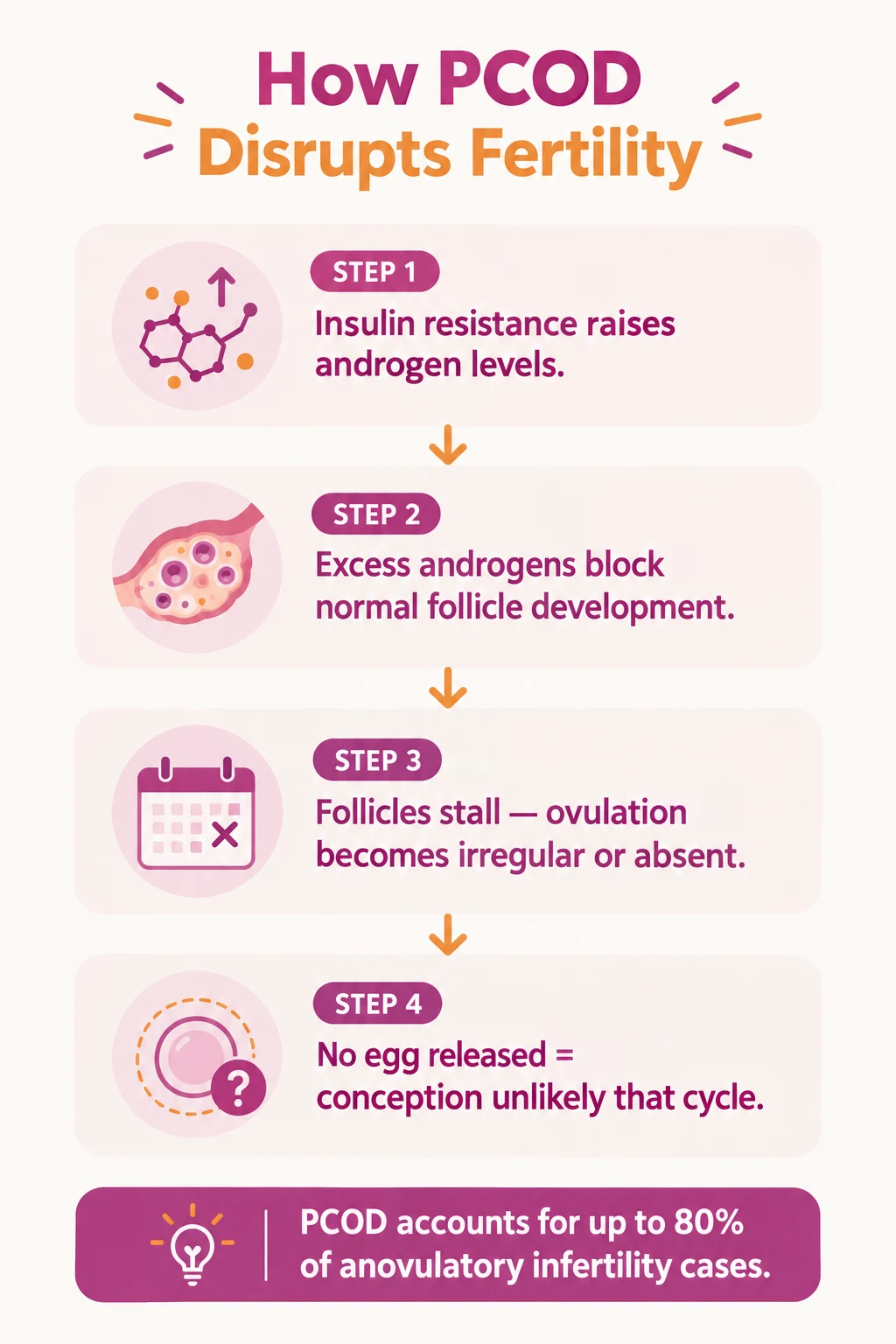
High androgens from insulin resistance stall follicles before they mature. No mature follicle, no ovulation. No ovulation, no conception that cycle. The disruption is hormonal throughout, not structural. Hormonal problems respond to treatment. Structural ones often don’t, which is why PCOD-related infertility has far better outcomes than many women expect when they first hear the diagnosis.
But timing still matters. A proper hormonal workup first. Then a plan. Structured infertility treatment built around your actual ovulation pattern beats any generic protocol.
What Treatment Options Actually Work for PCOD-Related Infertility?
Not every case needs the same approach. Milder disruption, simpler fix.
- Lifestyle changes before anything else: A 5 to 10 percent drop in body weight can restart ovulation without any medication. Doesn’t work for everyone. Works often enough that it’s always worth trying first.
- Letrozole for ovulation induction: Currently the preferred first-line medication for PCOD-related anovulation. It lowers estrogen briefly, prompts FSH release from the brain, and gives a follicle the signal it needs to develop properly.
- Metformin used alongside oral medication: Addresses insulin resistance at the root. When combined with letrozole, pregnancy rates climb noticeably compared to either medication alone. That combination is particularly relevant in PCOD because insulin resistance sits underneath almost everything else.
- IUI or IVF if oral cycles don’t work: Ovulation induction across a few monitored cycles is where treatment starts for most women. IUI follows if those cycles don’t lead to pregnancy. IVF comes last, not first.
The hormonal context behind all of this is covered in the earlier post on PCOD cure and management.
Why Choose Dr. Bhoomika Jain?
Dr. Bhoomika Jain brings over nine years in obstetrics, gynecology, and reproductive health, backed by a Fellowship in Assisted Reproductive Techniques from KEM Hospital, Mumbai. PCOD and infertility get treated as one connected problem here, not two separate referrals. Each case gets assessed against the specific hormonal pattern causing anovulation, and treatment moves through stages only when the previous one hasn’t delivered results. Women who arrive having been told IVF is their only option frequently find that ovulation induction changes that picture. Every step in the plan gets explained before it’s taken, and the reasoning behind it doesn’t get skipped.
Does PCOD cause infertility that can’t be reversed, or is treatment actually working?
FAQs
Does PCOD always cause infertility?
No. Plenty of women with PCOD conceive naturally, without any medical intervention.
Can I get pregnant with PCOD without IVF?
Yes. Ovulation induction gets most women with PCOD pregnant before IVF becomes necessary.
How long does PCOD infertility treatment take?
Usually 3 to 6 monitored cycles, though individual hormone response changes that timeline.
Q4: Does PCOD come back after stopping treatment?
Yes, usually. Drop the lifestyle changes or follow-ups, and symptoms tend to return.
References:
Disclaimer: This blog is for general educational purposes only and is not a substitute for professional medical advice; please consult your doctor for personal care.