

Brown discharge before a period is something many women notice at least once in their lives. Although it is usually harmless and often linked to old menstrual blood, it can sometimes be associated with hormonal changes or certain gynecological conditions. Knowing why it happens, what symptoms to watch for, and when to seek medical advice can help you feel more confident about your reproductive health. If the discharge is persistent, accompanied by pain, or has an unusual odor, it is important to consult a gynecologist for proper evaluation and treatment.
What Does the Color of Brown Discharge Tell You?
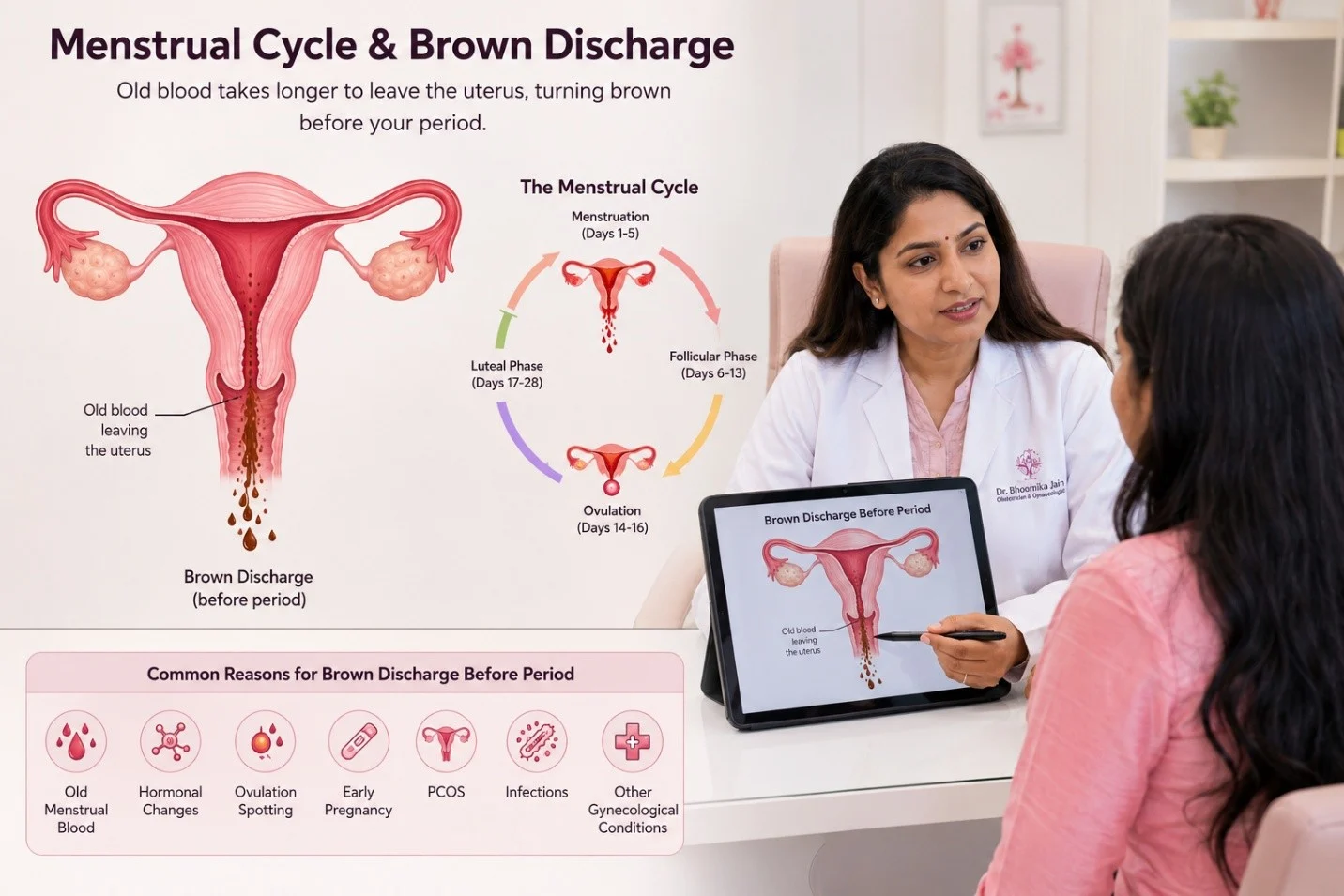
The color and timing of vaginal discharge often provide important clues about your reproductive health. Brown discharge usually indicates that the blood is older and has taken longer to leave the uterus, causing it to oxidize and turn brown. It may appear light brown, dark brown, or almost black depending on how long the blood has remained in the body. In many cases, seeing brown discharge a few days before your period is completely normal and simply means your uterus is clearing out old blood before fresh menstrual bleeding begins. However, when brown discharge occurs repeatedly and is accompanied by pelvic pain, foul-smelling discharge, fever, itching, or heavy bleeding, it may indicate an underlying condition that requires medical attention. According to Dr. Bhoomika Jain, understanding the characteristics of vaginal discharge, including its color, timing, amount, and associated symptoms, is an important part of assessing a woman’s reproductive health. A timely gynecological evaluation can help identify whether the discharge is a normal part of the menstrual cycle or a sign of a condition that requires treatment.
Brown discharge before a period is commonly caused by old blood leaving the uterus. While it is usually harmless, persistent spotting, pain, or unusual discharge should always be assessed by a gynecologist to identify the underlying cause.
— Dr. Bhoomika Jain
Common Causes of Brown Discharge 5 Days Before Period
1. Old Menstrual Blood
The most common cause of brown discharge before a period is old menstrual blood leaving the uterus. As the blood takes longer to exit, it turns brown due to oxidation. This is usually normal if the discharge is light, odorless, and lasts only a day or two.
2. Hormonal Changes
Hormonal fluctuations caused by stress, birth control pills, perimenopause, thyroid disorders, or PCOS can lead to brown spotting before a period. These changes may also result in irregular menstrual cycles.
3. Ovulation Spotting
Some women experience light brown spotting around ovulation due to temporary hormonal changes. It is usually mild, lasts for a short time, and resolves without treatment.
4. Early Pregnancy (Implantation Bleeding)
Light brown spotting before an expected period may be implantation bleeding, an early sign of pregnancy. If your period is delayed, consider taking a pregnancy test and consulting a gynecologist.
5. Polycystic Ovary Syndrome (PCOS)
PCOS can cause hormonal imbalances, irregular periods, and occasional brown discharge. It may also be associated with acne, weight gain, excessive hair growth, and fertility concerns.
6. Vaginal or Cervical Infections
Bacterial, fungal, or sexually transmitted infections may cause brown discharge along with symptoms such as a foul odor, itching, pelvic pain, or burning during urination. Medical evaluation is recommended if these symptoms occur.
7. Other Gynecological Conditions
Conditions such as uterine fibroids, endometriosis, adenomyosis, and cervical polyps may cause recurring brown discharge, especially when accompanied by heavy bleeding, severe cramps, or pelvic pain. A gynecologist should assess persistent symptoms.
Concerned About Brown Discharge Before Your Period?
Occasional brown discharge is often harmless, but persistent spotting, pelvic pain, irregular periods, or unusual vaginal discharge should never be ignored. Early diagnosis can help identify the cause and ensure timely treatment.
When Is Brown Discharge Before a Period Normal?
Brown discharge before menstruation is usually considered normal when it appears for a day or two before your period starts and is not associated with pain, foul odor, fever, or heavy bleeding. It commonly occurs because old blood is slowly leaving the uterus and is often seen at the beginning or end of a menstrual cycle.
It may also occur during ovulation, after menstruation, while adjusting to hormonal contraceptives, or during the transition to perimenopause. In these situations, the discharge is generally light, temporary, and resolves without treatment. However, if the spotting becomes frequent, lasts for several days, or is accompanied by other symptoms, it is important to seek medical advice.
“The timing, color, amount, and associated symptoms of vaginal discharge provide valuable information about a woman’s reproductive health. A timely gynecological evaluation helps determine whether the discharge is a normal part of the menstrual cycle or a condition that requires treatment.”
— Dr. Bhoomika Jain
When Should You See a Gynecologist?
Although brown discharge is often harmless, you should consult a gynecologist if you experience:
- Brown discharge lasting for several days or recurring every month
- Foul-smelling vaginal discharge
- Severe pelvic or lower abdominal pain
- Fever or signs of infection
- Heavy menstrual bleeding or large blood clots
- Missed periods with persistent brown spotting
- Pain during sexual intercourse
- Vaginal bleeding after menopause
- Brown discharge accompanied by dizziness or unusual fatigue
Seeking medical advice early helps identify the underlying cause and prevents potential complications.
How Is Brown Discharge Diagnosed?
To determine the cause of brown discharge, your gynecologist will begin with a detailed discussion about your menstrual cycle, symptoms, and medical history. Depending on your condition, additional investigations may include:
- Pelvic examination
- Pregnancy test (if pregnancy is suspected)
- Pelvic ultrasound to assess the uterus and ovaries
- Pap smear to evaluate cervical health
- Vaginal swab or laboratory tests to detect infections
- Hormonal blood tests when hormonal imbalance or PCOS is suspected
A thorough evaluation helps identify the exact cause and allows your gynecologist to recommend the most appropriate treatment.

Treatment for Brown Discharge Before a Period
The treatment for brown discharge 5 days before a period depends on its underlying cause. If the discharge is simply old menstrual blood and occurs occasionally without other symptoms, no treatment is usually required. Your gynecologist may recommend monitoring your menstrual cycle for a few months.
When hormonal imbalance, irregular periods, or conditions such as PCOS are identified, personalized treatment may be advised to help regulate the menstrual cycle and improve overall reproductive health. If an infection is present, appropriate medications such as antibiotics or antifungal treatment may be prescribed. Women with conditions such as uterine fibroids, endometriosis, or cervical polyps may require further evaluation and targeted gynecological care.
At Dr. Bhoomika Jain’s clinic, services such as PCOS Management, Menstrual Disorder Treatment, Women’s Wellness Check-ups, Ultrasound Evaluation, and Comprehensive Gynecological Consultation help identify the cause of abnormal discharge and guide patients toward the most suitable treatment plan.
Take Charge of Your Reproductive Health
Recurring brown discharge, irregular periods, or pelvic discomfort should not be ignored. Early medical evaluation can help identify the cause and provide timely treatment.
Tips for Menstrual & Vaginal Health
- Maintain good intimate hygiene.
- Change sanitary products regularly during menstruation.
- Stay hydrated and eat a balanced diet.
- Avoid self-medicating for vaginal symptoms.
- Practice safe sex.
- Manage stress through exercise, yoga, or relaxation techniques.
- Track your menstrual cycle and any unusual symptoms.
- Schedule regular gynecological check-ups.
Conclusion
Brown discharge 5 days before a period is often caused by old menstrual blood and is usually harmless. However, persistent spotting, foul-smelling discharge, pelvic pain, heavy bleeding, or missed periods should not be ignored. Understanding the possible causes and seeking timely medical advice can help identify any underlying condition and ensure appropriate treatment. If you have recurring symptoms or concerns about your menstrual cycle, consulting Dr. Bhoomika Jain can provide reassurance, accurate diagnosis, and personalized gynecological care.
FAQs
1. Is brown discharge 5 days before a period normal?
Yes, it is often normal and usually represents old blood leaving the uterus before menstruation.
2. Can brown discharge be an early sign of pregnancy?
Yes, light brown spotting may occur due to implantation bleeding in early pregnancy, but a pregnancy test is needed for confirmation.
3. Can PCOS cause brown discharge before a period?
Yes, hormonal imbalances associated with PCOS can contribute to irregular periods and occasional brown spotting.
4. When should I see a gynecologist?
Consult a gynecologist if the discharge is persistent, foul-smelling, painful, heavy, or accompanied by missed periods or fever.
5. How is brown discharge treated?
Treatment depends on the cause and may include observation, medications for infections, hormonal management, or treatment for underlying gynecological conditions.