
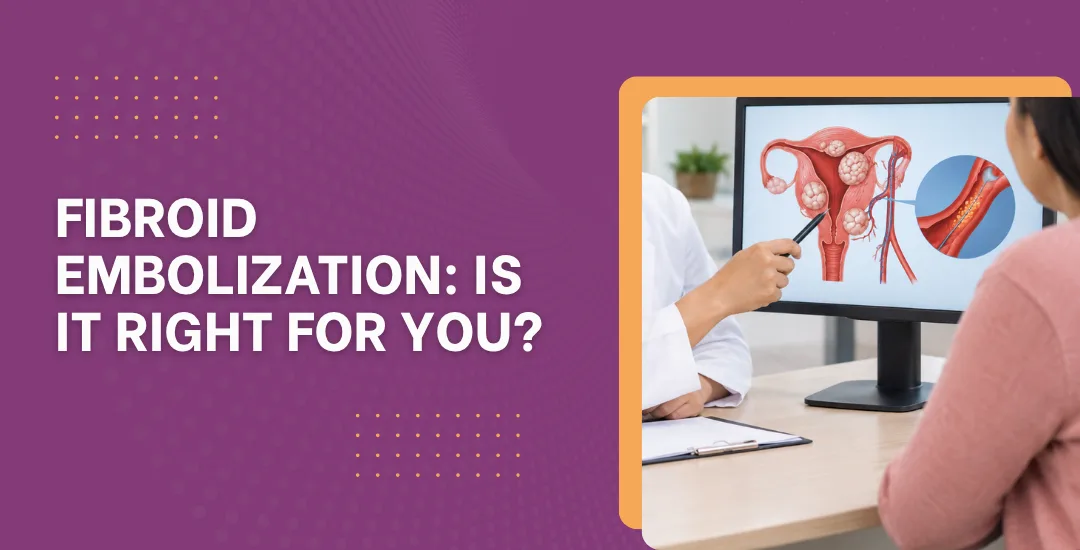
Plenty of women get told surgery is the only way out of fibroids. It isn’t. Sitting between “do nothing” and “remove the uterus” is a third option most people never hear about. Doctors call it uterine fibroid embolization, and it shrinks fibroids without any open surgery by choking off the blood keeping them going. Take away the blood and the fibroid can’t survive. It shrivels, the symptoms back off, and the uterus stays untouched. That’s the pull of fibroid embolization for so many women, a genuine stand-in for a hysterectomy or myomectomy, no major cut, and you’re recovering in days rather than weeks. Is it for everyone? No. But when it fits, it fits well.
According to Dr. Bhoomika Jain, one of the leading gynecologist in Marine Lines, “Embolization gets overlooked because women assume surgery is the only way to deal with fibroids. For the right patient, it clears the symptoms while keeping the uterus, and recovery takes days, not weeks.”
How Does Uterine Fibroid Embolization Work?
The whole thing rests on a simple idea: starve the fibroid of its blood supply.
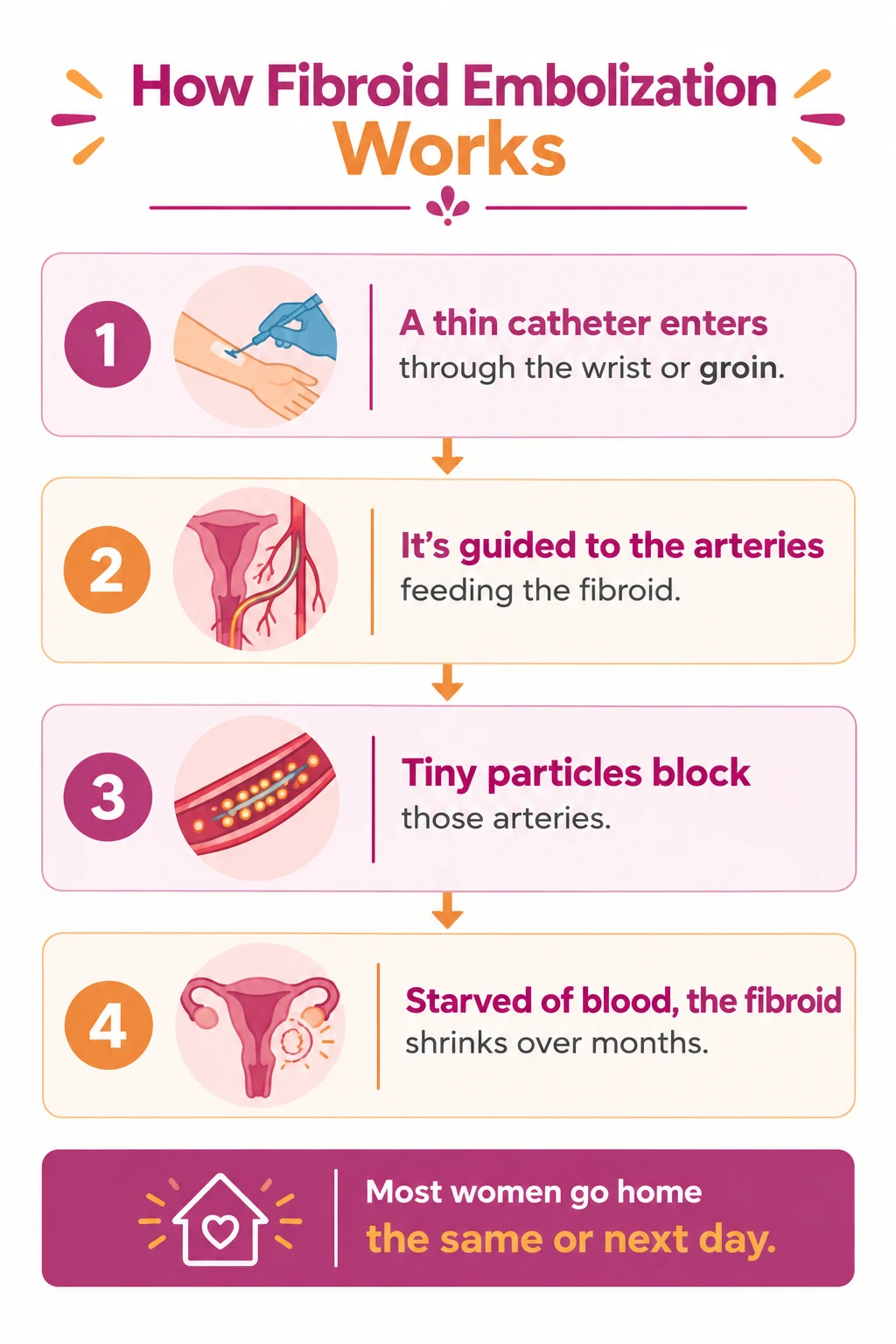
- Minimally invasive access: In goes a thin catheter, threaded by a radiologist through the wrist or groin. No large cut. Nothing opened up.
- Targeted blockage: Guide that catheter to the arteries feeding the fibroid, release tiny particles, and the blood supply gets sealed off right at the source.
- Gradual shrinkage: Deprived of blood, the fibroid softens and keeps shrinking over the following weeks and months, with the symptoms fading as it goes.
- Uterus stays put: Where a hysterectomy takes the uterus out, this leaves it exactly where it should be. Nothing removed.
Deciding whether it’s the right fit for you starts with proper uterine fibroids treatment and assessment.
Who Is a Good Candidate for Fibroid Embolization?
Suits a lot of women. Not every one, though, and a handful of things decide it.
| Situation | Embolization Suitability |
| Heavy bleeding from fibroids | Usually a strong fit |
| Wants to avoid surgery | Well suited |
| Planning future pregnancy | Needs careful discussion |
| Very large or numerous fibroids | May need surgical review |
- Heavy or prolonged bleeding: Is heavy bleeding your biggest complaint? Then embolization usually delivers, because it goes after the bleeding head-on.
- Wanting to keep the uterus: For women set on dodging a hysterectomy, this clears the fibroids and leaves the uterus alone. That’s the entire draw.
- Future pregnancy plans: Nobody can promise how fertility holds up afterward. So if a baby’s still on your list, that’s a conversation to have upfront, not later.
- Fibroid size and number: Some fibroids are just too large, or there are simply too many, and surgery becomes the wiser call. A proper assessment settles it.
When heavy bleeding is the thing driving you toward treatment, the earlier piece on heavy periods due to fibroids pairs well with this one.
Why Choose Dr. Bhoomika Jain?
Dr. Bhoomika Jain carries more than nine years across obstetrics, gynecology, and reproductive health, along with a Fellowship in Assisted Reproductive Techniques from KEM Hospital, Mumbai. She won’t push one route by default. Instead she weighs embolization against surgery on what actually matters to you, the fibroids themselves, your symptoms, and whether you’re hoping for a pregnancy. Every option comes explained in plain terms, and the plan gets talked through before anything gets underway.
Told a hysterectomy is your only option for fibroids? Ask about embolization first.
FAQs
Is fibroid embolization painful?
You’ll get some cramping for a day or two, kept in check with medication. Most women feel like themselves again within a week.
Does embolization affect fertility?
Possibly, and outcomes differ from woman to woman. Planning a pregnancy? Then weigh surgery against embolization before you decide.
Do fibroids grow back after embolization?
The ones treated seldom return. New fibroids can crop up later, sure, but most women find the relief lasts.
How long is recovery after the procedure?
For most, it’s home the same day or the next, and back to normal inside a week. Nowhere near as long as surgery.
References:
Disclaimer: This blog is for general educational purposes only and is not a substitute for professional medical advice; please consult your doctor for personal care.