
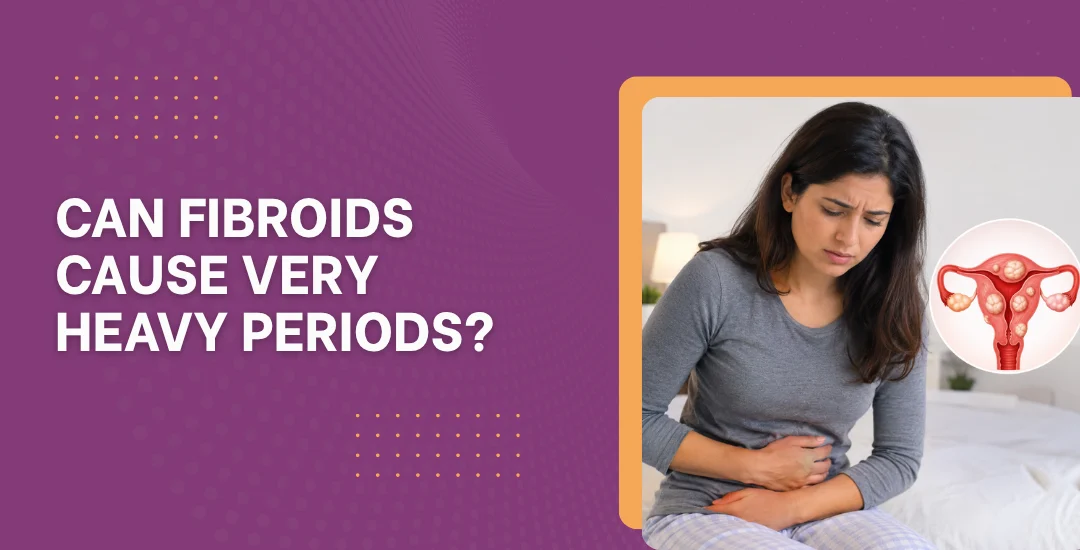
Yes, and they’re a frequent culprit. Among all the reasons for unusually heavy menstrual bleeding, uterine fibroids are one of the most common. A fibroid is a noncancerous growth in the wall of the uterus, and how much trouble it causes comes down to two factors: its size, and its position. Get one in the wrong spot and a period you used to manage without a second thought becomes a lot heavier. Soaking through pads, clots, bleeding that overstays its welcome. Heavy periods due to fibroids drive plenty of women to seek help, and here’s the encouraging part: identify the cause, and it treats well.
According to Dr. Bhoomika Jain, one of the leading gynecologist in Marine Lines, “Heavy bleeding gets brushed off as normal far too often. When fibroids are behind it, the pattern is usually clear on an ultrasound, and once we see the size and position, the treatment path follows from there.”
How Do Fibroids Cause Heavy Bleeding?
How much a fibroid ramps up bleeding really comes down to where it sits and what it does to the uterus.
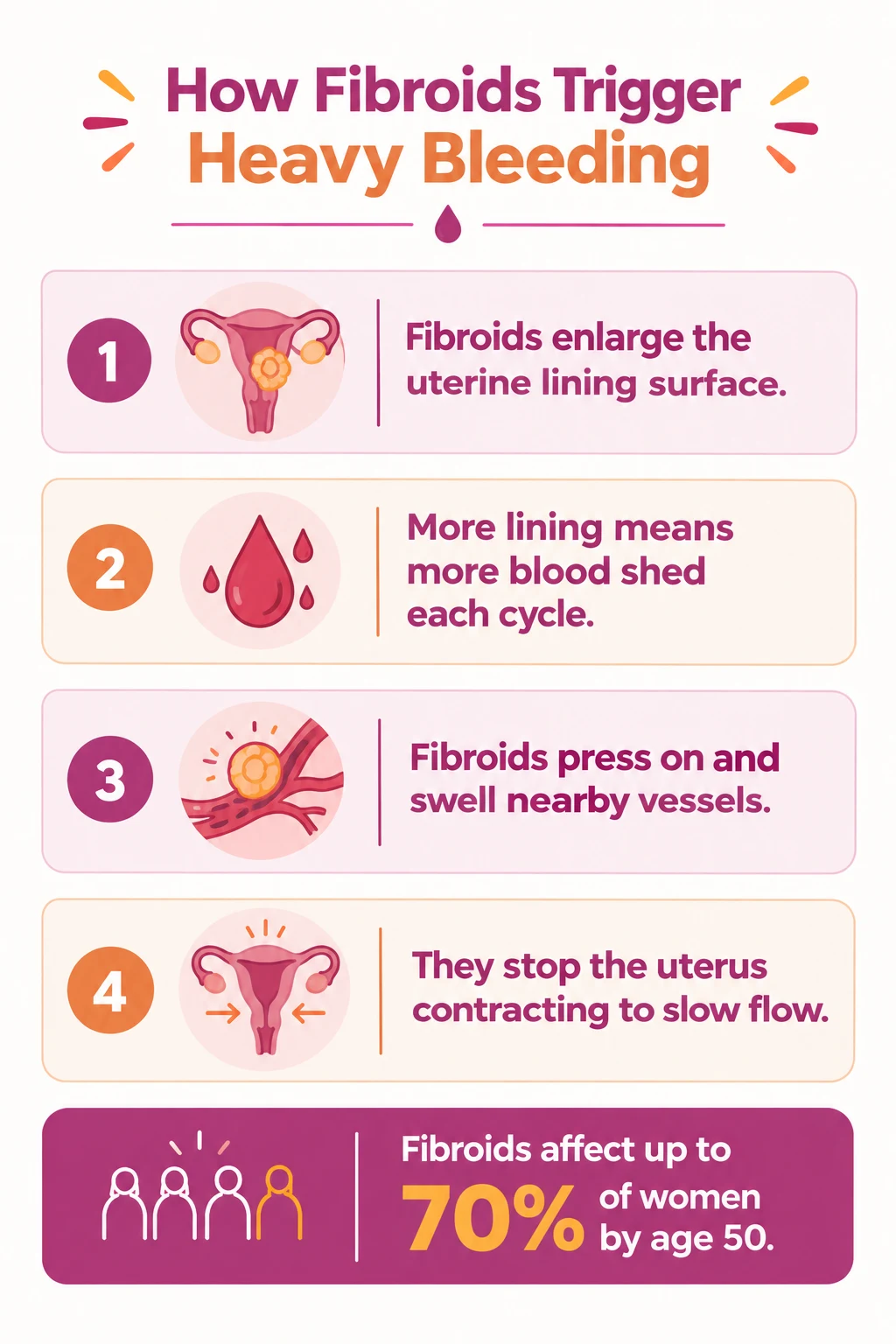
- Larger lining surface: A fibroid stretches the uterine wall outward. That enlarges the lining shed each month, and more lining leaves more to bleed.
- Pressure on blood vessels: Sit a growth near the lining and it squeezes the surrounding vessels, widening them and driving extra blood into every period.
- Weaker contractions: Fill a uterus with fibroids and it can’t clench down properly, yet those contractions are precisely what keeps the flow in check.
- Position matters most: Submucosal fibroids, the ones sitting just below the lining, are the troublemakers behind the heaviest bleeding.
Nailing down whether fibroids are really behind it starts with proper uterine fibroids treatment and assessment.
When Should Heavy Periods Worry You?
A heavy month here and there is normal. A steady run of them isn’t.
Sign | What It Suggests |
Soaking a pad hourly | Bleeding beyond the normal range |
Passing large clots | Possible fibroids or hormonal cause |
Periods over 7 days | Prolonged menstrual bleeding |
Fatigue or breathlessness | Possible iron-deficiency anaemia |
- Hourly pad changes: Reaching for a fresh pad or tampon every hour, several hours straight, is a fairly loud signal that the bleeding needs checking.
- Large or frequent clots: When clots the size of a coin keep showing up month after month, fibroids or a hormonal imbalance is usually the reason.
- Bleeding beyond a week: Any period that regularly overshoots seven days is prolonged, and that’s a reason to get seen, not to sit tight.
- Signs of anaemia: Tiredness that won’t shift, breathlessness, a pale look. These usually mean the blood loss has started draining your iron.
Because hormones can stoke heavy bleeding every bit as much as fibroids, the fuller picture in PCOD cure and management is worth reading if your cycles run irregular too.
Why Choose Dr. Bhoomika Jain?
Dr. Bhoomika Jain has more than nine years behind her across obstetrics, gynecology, and reproductive health, along with a Fellowship in Assisted Reproductive Techniques from KEM Hospital, Mumbai. Her first step is always the ultrasound, checking how big the fibroids are and where they sit, and only then does she weigh medication against a minor procedure or surgery. You’ll hear the options in plain terms, and the plan gets talked through before it starts.
Changing pads every hour or passing clots each cycle? That’s worth an ultrasound.
FAQs
Do all fibroids cause heavy periods?
No. A lot of them stay small and never cause a thing. It’s the ones close to the lining that tend to bring on heavy bleeding.
Can fibroids be treated without surgery?
Frequently, yes. Medication and minor procedures cover a good share of cases, leaving surgery for the bigger fibroids.
Do fibroids go away on their own?
Seldom. Most shrink once estrogen falls after menopause, but they rarely clear out before then.
Can heavy periods from fibroids cause anaemia?
Yes. Keep losing that much blood month after month and iron levels drop, which is where the fatigue comes from.
References:
Disclaimer: This blog is for general educational purposes only and is not a substitute for professional medical advice; please consult your doctor for personal care.