
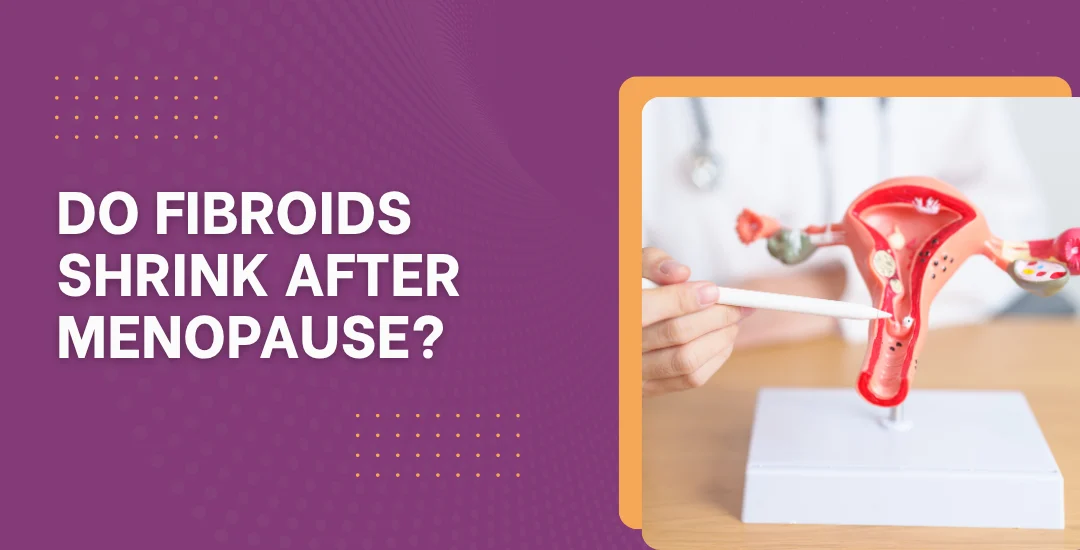
Yes, fibroids usually become smaller after menopause because the body produces much less estrogen and progesterone, the hormones that help fibroids grow. However, they don’t usually disappear completely. While many women notice fewer symptoms like pain or pressure, some fibroids remain, and in rare cases, they may continue to grow.
According to Dr. Bhoomika Jain, gynecologist in Marine Lines, Mumbai:”Many women think fibroids will completely disappear after menopause. While they often shrink and cause fewer symptoms, they don’t always go away. If a fibroid continues to grow after menopause, it should be checked by a gynecologist to make sure everything is okay.”
Why Fibroids Shrink After Menopause?
Fibroids are hormone-dependent growths. Once estrogen and progesterone drop after menopause, the hormonal fuel driving them disappears.
Hormones drop, growth stops: Estrogen and progesterone fall sharply once menopause hits. Fibroids essentially run on those hormones, so take the fuel away and growth slows down or stops entirely.
Shrinkage takes time: Give it months, sometimes a year or two, before any real size reduction becomes noticeable. Symptoms don’t ease up the moment periods stop.
Bleeding resolves faster than pressure: Bleeding stops because periods are gone. Bulk symptoms and pelvic pressure are slower to fade since they follow the fibroid’s actual shrinkage, not the calendar.
Not every fibroid responds the same way: Bigger ones lag behind smaller ones. Some women barely see a change even years in, which is frustrating but not automatically a cause for alarm.
For a detailed overview of how fibroids are assessed and managed, refer to the uterine fibroids treatment page.
When Fibroid Growth After Menopause Is a Concern?
Growth after menopause goes against what is expected. When it happens, it warrants a proper look, not a wait-and-see approach.
Growth after menopause is not the norm: Fibroids shrinking is the expected pattern. Any fibroid that continues growing once estrogen has dropped is worth investigating properly rather than monitoring casually.
New or worsening symptoms need attention: Pain, pressure, and especially any bleeding after menopause should not be happening at all, regardless of fibroid history. These are not things to observe and hope resolve.
Imaging clarifies what is actually happening: An ultrasound or MRI distinguishes between a fibroid that is simply slow to shrink and one that needs a much closer eye. Testing here is diagnostic, not precautionary.
Size alone is not always the trigger: Even a fibroid showing no dramatic growth but producing new symptoms after menopause deserves evaluation. Symptom change matters as much as size change when hormones are no longer in the picture.
For a broader overview of how fibroid treatment decisions are made, refer to this earlier post on whether fibroids always need surgery.
Why Choose Dr. Bhoomika Jain?
Dr. Bhoomika Jain has spent over nine years focused on obstetrics, gynecology, and hormonal health across all life stages. Her Fellowship in Assisted Reproductive Techniques from KEM Hospital, Mumbai, shapes her approach, hormones first, symptoms second. She doesn’t treat a fibroid that persists after menopause as something to monitor passively. Each case gets traced back to what the hormonal picture looks like, how the fibroid is behaving on imaging, and whether the pattern fits expected shrinkage or needs further investigation. Patients get a doctor who explains what is happening and why, not just reassurance that things will resolve on their own.
Fibroids after menopause look different on every patient, so a fixed monitoring protocol doesn’t serve most women well. Check-ins include periodic imaging to track how fibroids are responding over time, adjusting the plan before a stable situation becomes a complicated one. For women who have had fibroids for years and are now moving through the menopausal transition, clarity comes from tracking the hormonal picture properly, not from assuming shrinkage is guaranteed.
Have questions about fibroids and menopause? Schedule a consultation for a proper assessment.
FAQs
Can fibroids disappear completely after menopause?
Rarely, honestly. Most just shrink down enough that they stop causing trouble. Small ones have the best shot at nearly vanishing.
Is bleeding after menopause always related to fibroids?
No, and don’t assume that’s the cause even if you’ve had fibroids for years. Any bleeding after menopause needs to be checked.
Does hormone replacement therapy affect fibroids after menopause?
It can, yes. HRT puts hormones back into the picture, so it sometimes slows shrinkage down. Occasionally it can even keep a fibroid growing a bit longer than expected.
How long does it take for fibroids to shrink after menopause?
Varies a lot. Could be several months. Could stretch past a year or two depending on size and how quickly your own hormones drop off.
Should I still get checked if I have no symptoms?
Worth doing anyway, especially with larger fibroids. No symptoms doesn’t mean nothing’s happening, it just means nothing’s bothering you yet.
References:
Disclaimer: This blog is for general educational purposes only and is not a substitute for professional medical advice; please consult your doctor for personal care.