

No single test confirms PCOD. Not one scan. Not one symptom on its own. Doctors build the picture from your cycle history, a physical exam, blood work, and an ultrasound of the ovaries. Each piece either backs up the diagnosis or knocks it down, and only once enough of them agree does the label actually stick. Most women get a clear answer in one visit. Sometimes it takes two. Either way, that’s still better than a guess dressed up as a diagnosis.
According to Dr. Bhoomika Jain, a gynecologist in Marine Lines, “I don’t confirm PCOD based on a single scan, or a single symptom. I wait until the full clinical picture is clear, because treating the wrong condition doesn’t help anyone.”
What Tests Are Used to Diagnose PCOD?
Part conversation. Part exam. Part lab work. Never one shortcut test.
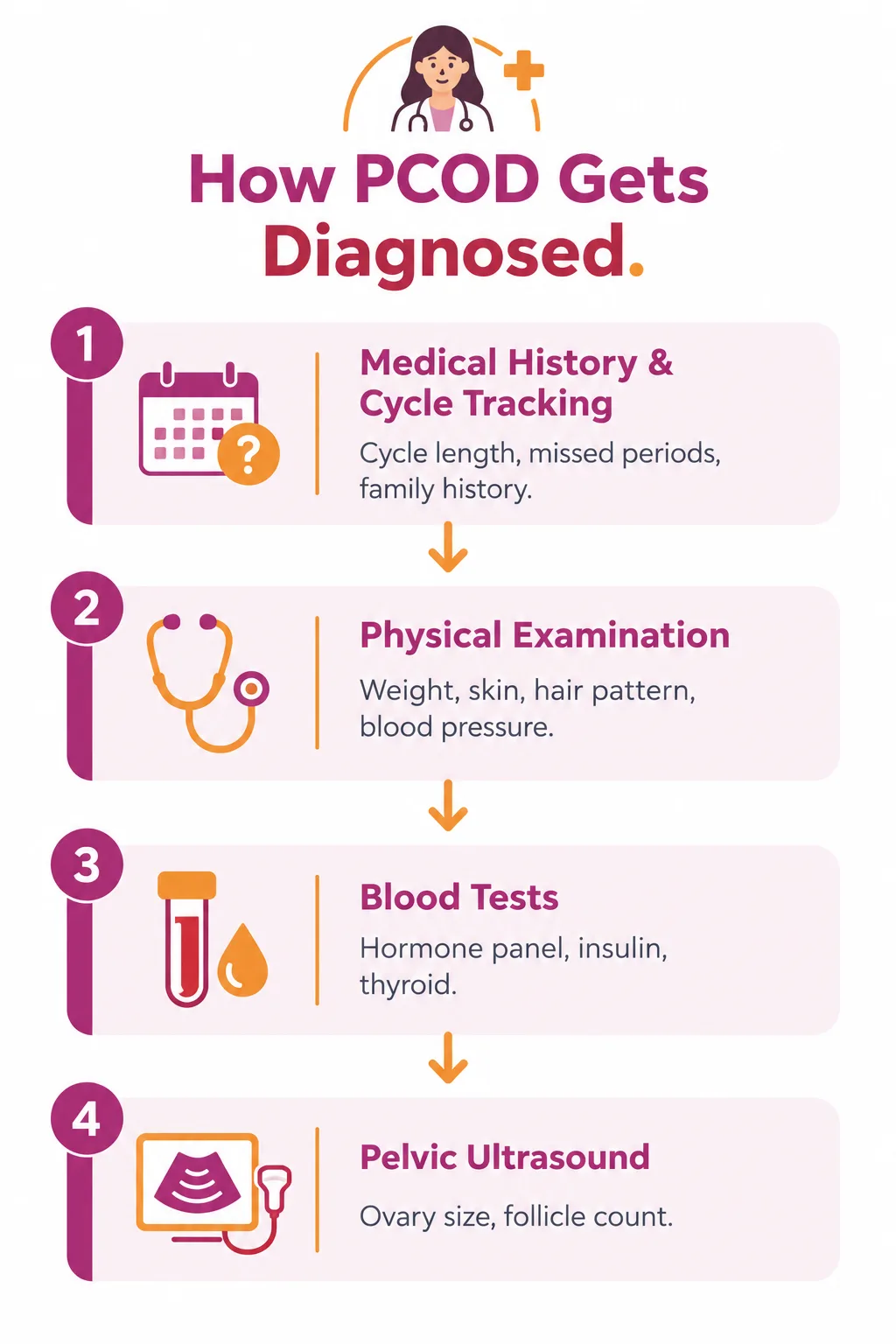
Here’s what most patients don’t expect. Doctors also check for conditions that mimic PCOD first, thyroid trouble, high prolactin, before landing on PCOD at all. A normal thyroid report isn’t a throwaway line on the chart. It’s often the exact thing that confirms PCOD is the right call and not something else wearing its symptoms. After that, it’s simple math. Two out of three: irregular cycles, raised androgens, or that follicle pattern on the scan. Hit two, and the diagnosis closes.
Get this sequence right early, and you skip months of guessing. A PCOD treatment plan only works once the diagnosis actually holds up.
What Do the Diagnostic Criteria Actually Look For?
None of this is random. Every symptom gets checked against a set framework, not a hunch.
Cycle Irregularity: Periods more than 35 days apart. Or fewer than nine cycles in a year. On its own, that’s already one confirming sign.
Hormonal Signs: Acne, extra facial or body hair, or blood work showing raised androgens. Visible on the skin or buried in a lab report, either one counts the same.
Ovary Pattern on Scan: Twelve or more small follicles in one ovary. Sometimes just an enlarged ovarian volume instead. Not every case shows this, and that catches people off guard.
Two Out of Three: Any two of these three, and PCOD gets confirmed. All three isn’t needed. Most patients walk in assuming it is.
Diagnosis is just the starting line. What comes next depends on whether PCOD needs lifelong care, and our piece on PCOD cure or management covers exactly that.
Why Choose Dr. Bhoomika Jain?
Dr. Bhoomika Jain has spent over nine years in obstetrics, gynecology, and reproductive medicine, with a Fellowship in Assisted Reproductive Techniques from KEM Hospital, Mumbai. Nothing about her diagnostic process is rushed. Cycle history, exam, and lab work all get reviewed together before any label gets attached, and look-alike conditions like thyroid or prolactin issues get ruled out as a standard step, not an afterthought. A wrong or rushed PCOD diagnosis means months of the wrong treatment, and that’s a cost most women shouldn’t have to carry. Every result gets explained in plain words, not left sitting as a number on a printout, so patients walk out knowing exactly why they were, or weren’t, diagnosed with PCOD.
Still unsure which tests actually confirm PCOD?
FAQs
Is one ultrasound enough to diagnose PCOD?
No. It’s one finding among several, not a standalone answer.
Do I need to fast before PCOD blood tests?
Usually, yes, for insulin and glucose readings. Check with your doctor first.
Can PCOD be diagnosed without an ultrasound?
Yes, if hormonal signs and irregular cycles are both clearly there.
How long does a PCOD diagnosis usually take?
One visit, often. Sometimes two, once everything’s reviewed together.
References:
Disclaimer: This blog is for general educational purposes only and is not a substitute for professional medical advice; please consult your doctor for personal care.