
PCOD has no permanent cure in the strict clinical sense. The hormonal tendency stays for life, and no treatment removes it entirely. With consistent care, though, symptoms such as irregular periods, weight changes, and acne can be controlled well enough to resemble long-term remission, often for years at a time.
According to Dr. Bhoomika Jain, a gynecologist in Marine Lines, “PCOD isn’t something you fix once and move on from. It’s something you keep watch over, and the women who stay consistent with that end up living completely normal, symptom-free lives.”
Can PCOD Actually Be Cured, or Just Held in Check?
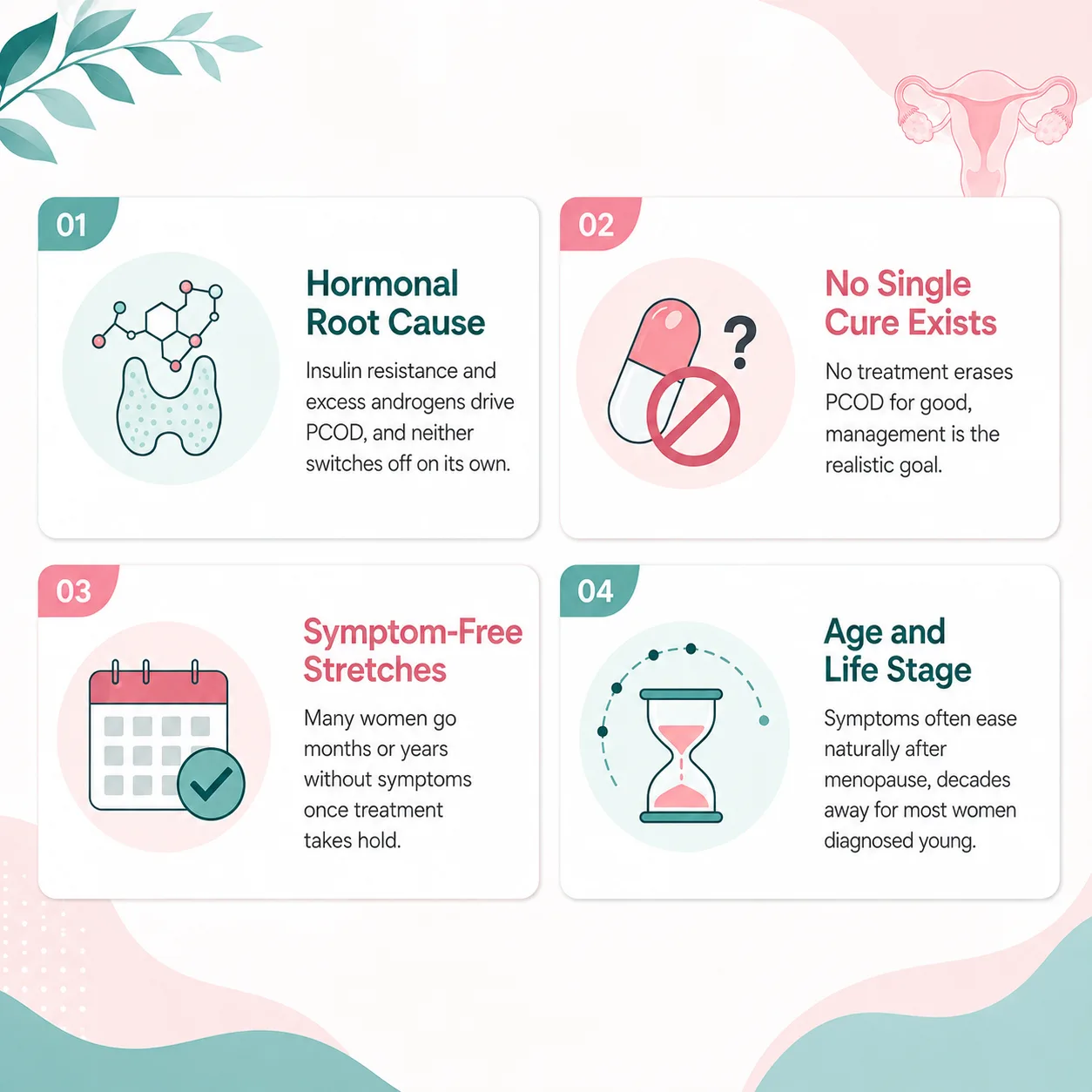
Insulin resistance and excess androgens keep PCOD active from within, and that loop rarely shuts off completely. No single treatment cures it, so most women find stability through consistent care rather than a one-time fix. Symptom-free stretches happen often once things settle. But the underlying tendency stays, right up until menopause, and for most women diagnosed in their twenties, that’s still decades away.
Getting the diagnosis right is where this actually starts. A structured PCOD treatment plan built around your specific hormones works far better than trial and error.
What Keeps PCOD Under Control, Long Term?
One prescription won’t do it. Control comes from several habits, working together, day after day.
Consistent Lifestyle Changes: Diet and exercise aren’t optional extras here. Insulin resistance responds to them directly, and little else moves the needle as much.
Regular Monitoring: A hormone panel or ultrasound every few months catches drift early. Wait too long, and symptoms come back louder.
Medication Adherence: Stop the pills or metformin abruptly, and irregular cycles or acne often return within weeks. Tapering off properly matters.
Stress and Sleep: Cortisol feeds the same hormonal loop, quietly. Poor sleep undoes treatment that’s otherwise working fine.
Weight and skin changes are usually the first sign this loop is active again. Understanding the link between PCOD, weight gain and acne can help you catch it early.
Why Choose Dr. Bhoomika Jain?
Dr. Bhoomika Jain has spent over nine years focused on obstetrics, gynecology, and reproductive health. Her Fellowship in Assisted Reproductive Techniques from KEM Hospital, Mumbai, shapes her approach, hormones first, symptoms second. She doesn’t treat acne or irregular cycles as separate problems. So each one gets traced back to the imbalance actually driving it. Plans combine medication, lifestyle correction, and fertility support where needed, and they shift as your body responds. Patients get a doctor who explains the why, not just a prescription pushed across the table.
PCOD looks different on every patient, so cookie-cutter protocols don’t hold up for long. Check-ins happen every few months, recalibrating before things creep back in. For women who’ve managed PCOD for years, real stability often comes from treating the underlying hormonal imbalance, not just whichever symptom is loudest that week.
Wondering if your PCOD symptoms are actually reversible?
FAQs
Q1: Can PCOD be cured completely?
No. It’s chronic, but treatment done right keeps symptoms fully in check.
Q2: Does PCOD go away after pregnancy?
Not on its own. Symptoms ease for a while, then creep back without continued care.
Q3: Can weight loss cure PCOD permanently?
It helps a lot, but weight loss alone won’t fix the hormonal imbalance for good.
Q4: Does PCOD come back after stopping treatment?
Yes, usually. Drop the lifestyle changes or follow-ups, and symptoms tend to return.
References:
Disclaimer: This blog is for general educational purposes only and is not a substitute for professional medical advice; please consult your doctor for personal care.