
Conceiving at 35 or later, the stage doctors call advanced maternal age, does come with a few natural biological changes. It can take longer to conceive, the monitoring becomes more thorough, and a handful of risks tick upward. Yet the outcome is rarely in question. Far and away, most women in this bracket carry healthy pregnancies and deliver healthy babies. The margin narrows a little; the destination doesn’t move. Expect somewhat more planning and somewhat closer observation, and beyond that, much of the journey looks like it would at any age.
According to Dr. Bhoomika Jain, one of the leading gynecologist in Marine Lines, “The number 35 gets treated like a cliff edge, and it isn’t. It’s a point where we watch a little more closely and plan a little earlier. Most women sail through with the right monitoring in place.”
What Actually Changes in Pregnancy After 35?
A handful of biological shifts arrive with age, and understanding them takes the guesswork out of the worry.
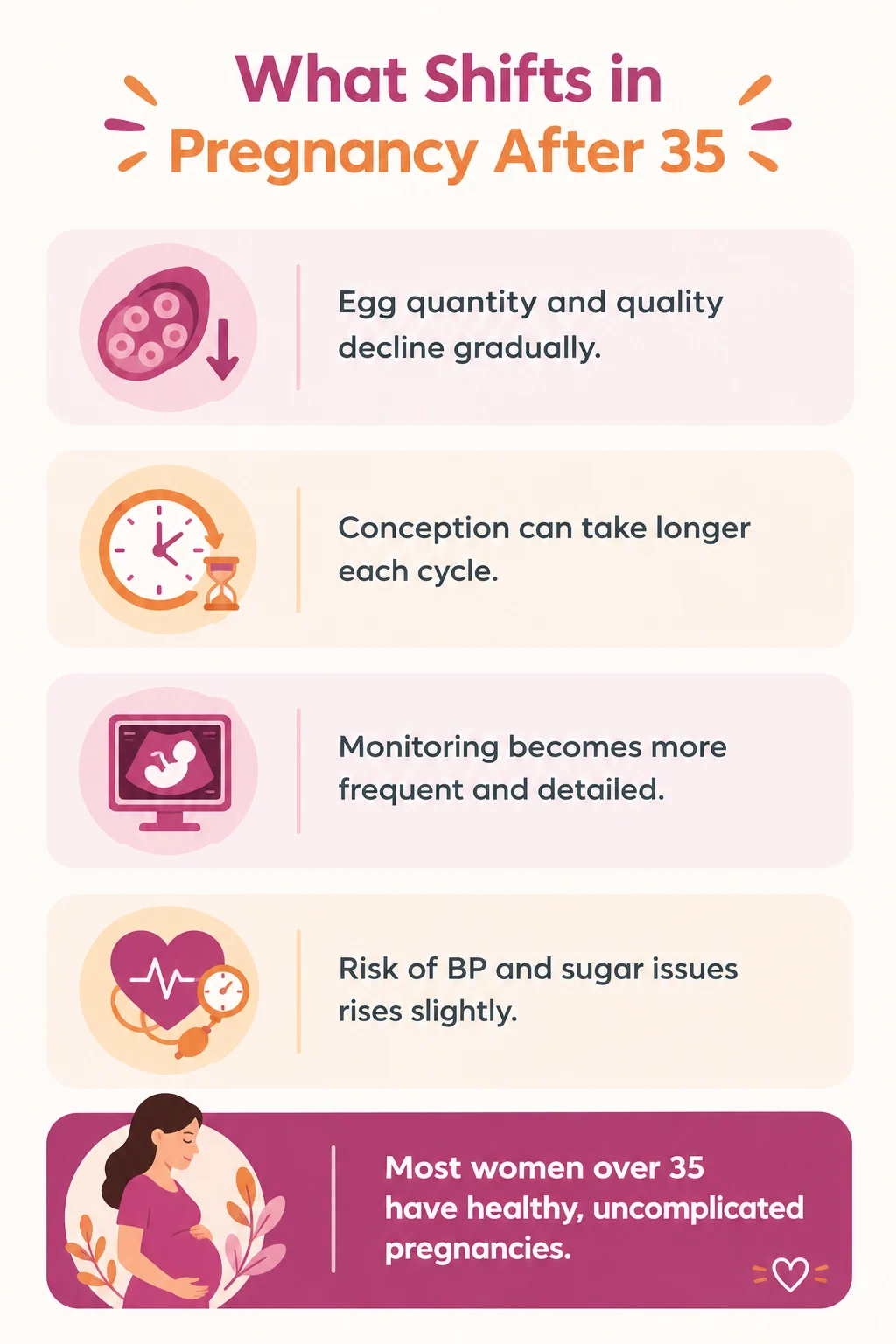
- Egg reserve declines: Egg numbers fall with age, and so does their quality, which is the chief reason conception tends to take longer past 35.
- Longer time to conceive: A cycle that once brought pregnancy quickly might now ask for a few more tries. That’s par for the course, not a red flag.
- Closer monitoring: You’ll have scans and tests more often, because spotting things early is exactly what keeps most age-related risks in check.
- Slightly higher risks: The odds of raised blood pressure, gestational diabetes, and chromosomal conditions creep up a little, though screening picks them up early.
Staying ahead of these shifts begins with proper pregnancy care.
What Extra Care Does Pregnancy After 35 Need?
The heart of pregnancy care doesn’t change. A few extras simply get added on top.
| Care Step | Why It Matters |
| Preconception check | Spots issues before conception |
| Early genetic screening | Assesses chromosomal risk |
| More frequent scans | Tracks growth and placenta |
| BP and sugar monitoring | Catches complications early |
- Preconception planning: Seeing a doctor before you conceive gets your vitamins, any existing conditions, and your timing sorted, and that head start strengthens the whole pregnancy.
- Genetic screening: A test such as NIPT gauges chromosomal risk early on, giving you either reassurance or a clear plan with plenty of time to spare.
- Growth and placenta scans: A few extra ultrasounds track how the baby is growing and how the placenta is doing, since both deserve a closer look with age.
- Blood pressure and glucose checks: Keeping tabs on both catches gestational diabetes or hypertension early, right when they’re easiest to handle.
Because hormonal conditions can make conceiving harder at any age, the earlier piece on PCOD cure and management is worth a read if your cycles have run irregular.
Why Choose Dr. Bhoomika Jain?
Dr. Bhoomika Jain brings more than nine years across obstetrics, gynecology, and reproductive health, together with a Fellowship in Assisted Reproductive Techniques from KEM Hospital, Mumbai. To her, age is one factor among several, never a verdict, so the monitoring is shaped around your health rather than a number on a chart. She walks you through every step of the plan, and the thinking behind each added check never gets glossed over.
Planning a pregnancy after 35 and unsure what to expect? A preconception check is the place to start.
FAQs
Is 35 really a high-risk age for pregnancy?
Not by itself. Think of it as the point where monitoring picks up, while the great majority of pregnancies stay perfectly healthy.
Does fertility drop sharply at 35?
No sudden drop, more of a gentle slope. It may take a bit longer to conceive, yet plenty of women still manage it naturally.
What tests are recommended after 35?
A preconception check to begin, early genetic screening such as NIPT, then more regular growth scans and blood pressure checks.
Can I have a natural delivery after 35?
Absolutely, and many do. When the pregnancy is healthy, your age on its own is no barrier to a normal delivery.
References:
Disclaimer: This blog is for general educational purposes only and is not a substitute for professional medical advice; please consult your doctor for personal care.