
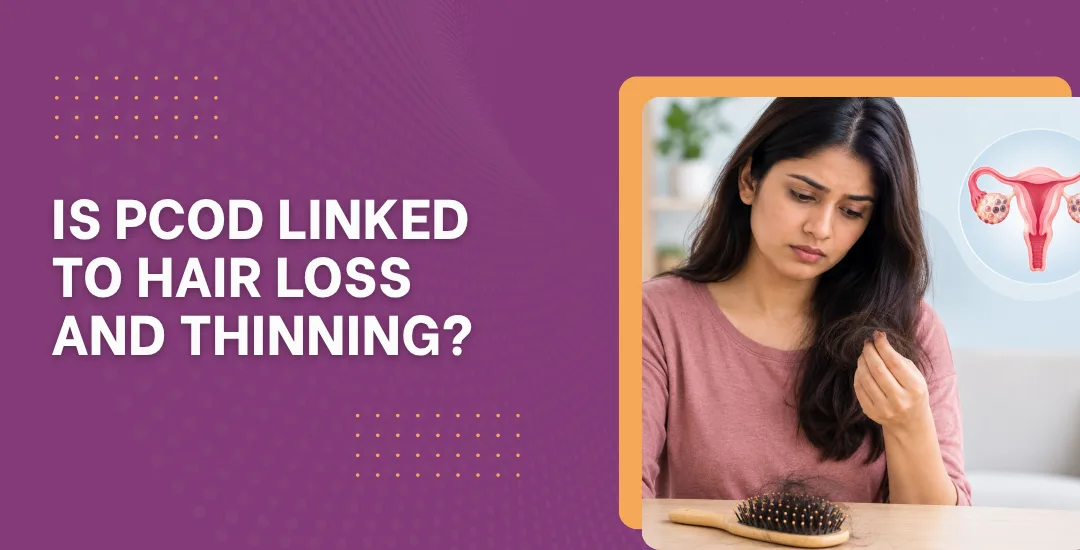
Yes. PCOD is directly tied to scalp hair loss and thinning, a pattern clinicians call female pattern hair loss or androgenetic alopecia. The cause is hormonal, not the shampoo you recently switched. Raised androgen levels gradually shrink hair follicles, so each new strand grows back finer and weaker until the scalp starts showing through.
According to Dr. Bhoomika Jain, one of the leading gynecologist in Marine Lines, “Most women blame stress or their hair products first. But when the thinning sits at the crown and follows irregular periods, the androgens are usually the real story, and that we can treat.”
How Does PCOD Actually Cause Hair Loss?
It all traces back to one place: the follicle.
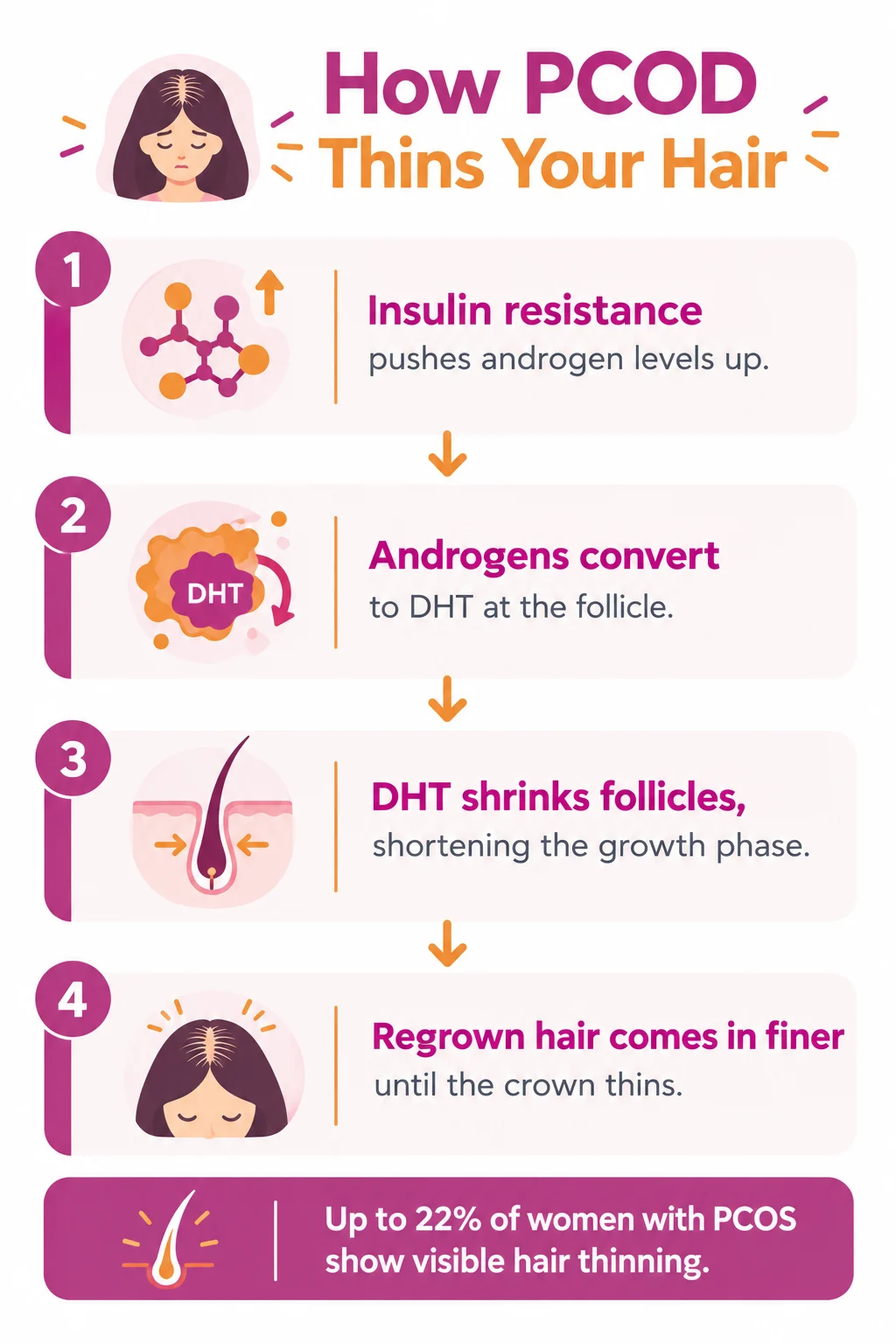
A hormone called DHT does most of the damage here. It cuts the follicle’s growth phase short, so hair returns finer with each round, and a few follicles eventually give up trying. That crown-first spread is the signature of pcod hair loss, which is why it looks nothing like patchy bald spots. Now for the part worth remembering. Hormones are driving all of it, so once you rein those in, the shedding slows, and if you’ve caught it early enough, hair can return. That’s exactly what structured PCOD treatment is built to address.
What Treatments Help Reverse PCOD Hair Loss?
Move early and you gain ground, well before the follicles pack it in. The strategy? Settle the hormone first, and the scalp tends to follow.
- Anti-androgen medication: Something like spironolactone stops androgens from gripping the follicle, lifting the pressure at the very spot the thinning begins.
- Topical minoxidil: Massage it into the scalp and it draws out the growth phase while thickening whatever strands are still hanging on. Patience matters here, so hold off judging it for a few months.
- Insulin and weight control: Pair a sensible diet with regular movement and metformin, and insulin resistance eases, taking androgens down with it. Your scalp gains from that, quietly.
- Correcting deficiencies: When iron, vitamin D, or ferritin run low, shedding gets worse. Top those back up and every other treatment stands on steadier ground.
Regrowth tends to follow hormonal balance, so the bigger picture in PCOD cure and management counts for just as much as any lotion or tablet.
Why Choose Dr. Bhoomika Jain?
Dr. Bhoomika Jain carries more than nine years across obstetrics, gynecology, and reproductive health, along with a Fellowship in Assisted Reproductive Techniques from KEM Hospital, Mumbai. Rather than chase the symptom, she works on the hormonal root under the thinning. Patients walk out with a plan laid out in plain terms, and nothing gets started before the reasoning behind it is clear.
Noticing more scalp through your part than last year? A simple hormonal check is worth booking.
FAQs
Does PCOD hair loss grow back?
Frequently, yes. Spot the thinning early, get the androgens in order, and regrowth usually follows, though think in months rather than weeks.
Is PCOD hair loss permanent?
Rarely, provided you act in time. The tough ones are follicles that have gone dormant over the years.
Which vitamin deficiency causes hair loss in PCOD?
Iron, ferritin, and vitamin D lead the pack. One blood test picks up all three.
Can diet alone stop PCOD hair fall?
It chips away at insulin and androgens, which helps, but on its own it seldom does the job. Most women combine it with medical treatment.
References:
Disclaimer: This blog is for general educational purposes only and is not a substitute for professional medical advice; please consult your doctor for personal care.